“If you see something, say something”: Exposing Nigeria’s political charlatans and spiritual merchants By Prince Dr. Wumi Akintide
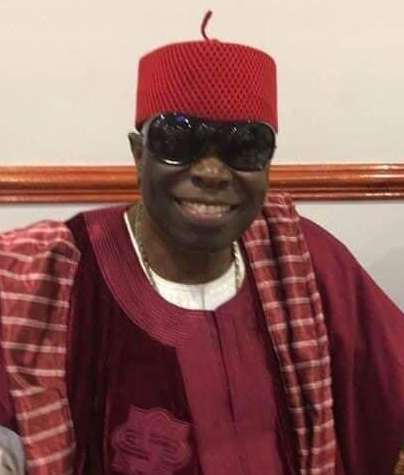
“If you see something, say something”: Exposing Nigeria’s political charlatans and spiritual merchants
Today, “Apuro Jeun” media outfits and opportunistic podcasts are mushrooming across Nigeria, turning into cheap tools for exploitation and extortion. They prey on money-bag politicians seeking elective offices as legislators and governors, including aspirants such as Adegoke Adelabu Jnr. of Oyo State.
Many of those behind these platforms are fake prophets and self-styled evangelists who have taken advantage of the free access provided by YouTube to start podcasts, not to enlighten the public, but to enrich themselves.

They deceive unsuspecting listeners by claiming they have a direct hotline to God, marketing false prophecies and selling spiritual influence for profit.
Nigeria today is awash with deceit and deception. Almost every storefront has become either a church or a mosque, manned by individuals who present themselves as intermediaries between God and the people.
These fake prophets and clerics charge millions of naira for dubious services and fabricated predictions in the name of God. A recent example is how Primate Ayodele allegedly attempted to extort Adegoke Adelabu Jnr., who is contesting for governor in Oyo State, by riding on the legacy of his late father, the famous Adelabu Penkelemesi.
These “Apuro Jeun” mercenaries and “Gbajú-ẹ̀” 419 merchants are present in all the 36 states of the federation and the Federal Capital Territory, Abuja.

They operate across religious and cultural lines—among Ìṣẹ̀ṣe devotees and interest groups, Christian associations, as well as Islamic and Muslim clerics.
They have become a scourge in states such as Ekiti, Ondo, Oyo, Ogun, Osun, Edo and Delta, extending across the South-South, the South-East, and not excluding the Northern states, where some still see themselves as the permanent owners of federal power, capable of making and unmaking governments.
In Ondo and Ekiti States especially, media outfits have multiplied beyond count. Aspiring politicians now float or finance media organisations solely to promote their ambitions.
These platforms churn out lies upon lies about their sponsors, deliberately misleading voters and confusing the general public ahead of elections.
I write to expose this menace because I am firmly convinced that Nigeria will never heal if we continue electing the wrong people into public office. We cannot keep repeating the same mistakes while expecting different outcomes. That will never happen.
If this country must survive, we must all change.
What we need most is awareness. Nigerians must open their eyes to the “abracadabra” going on around us—the desperation that leads to fake “Awards of Excellence” ceremonies organised for charlatans desperate for political office, only to end up in Abuja or state assemblies perpetuating cycles of bribery and corruption that have held Nigeria hostage for decades.
We need more credible whistle-blowers like Aliko Dangote, Africa’s richest man, who has spoken out against a few Nigerian saboteurs in the oil sector, individuals determined to frustrate the operations of government-owned refineries, including the Dangote Refinery.
Their actions prevent the reduction of fuel and gas prices in Nigeria, unlike Libya under the late Muammar Gaddafi, where petroleum sold for about nine cents per litre and oil wealth was used to benefit the entire population, not just a privileged few.
As Secretary to the Joint Economic Commission of Nigeria with the rest of the world, I travelled widely across Africa and beyond. Those experiences confirmed what Chief Obafemi Awolowo had long told Nigerians: land mass alone, especially in a desert country like Libya—the largest country in Africa—does not translate to a dense population.
Population naturally gravitates towards water, just as oases attract settlements in the desert.
It was this logic that Awolowo used to reject the fraudulent 1973 Nigerian census, which falsely claimed Kano’s population was three to four times that of Lagos, despite Lagos being a coastal city with abundant water.
That census was used to justify the creation of 44 local governments for Kano and only 20 for Lagos, despite Lagos’ obvious population density.
Chief Awolowo demolished that census in a powerful convocation address at the university that now bears his name. I know this personally because I drafted the first version of that speech in 1974 alongside Abdul-Azeez Attah, my Permanent Secretary at the Federal Ministry of Finance.
Although Awolowo appreciated our draft, he chose to write his own final speech. The 1973 census was uppermost in his mind, and he destroyed it with the stroke of his pen in an address broadcast to the entire world.
That convocation honoured Sir Eric Williams, Prime Minister of Trinidad, and Léopold Sédar Senghor, President of Senegal, and was attended by General Yakubu Gowon, then Nigeria’s Head of State.
At the time, Libya’s population was about three million, compared to Nigeria’s over 200 million today, despite Libya’s far larger land mass.
I have written all this because I have seen much in my lifetime, and I owe it to the youths of this country to share these truths before I exit the stage.
A lot is happening in Nigeria that we must talk about.
“If you see something, say something” is a policy that can help our country grow and develop.
Let us all strive to be part of the change we desire in Nigeria, not part of the problem.
That is why I do what I do, and I owe no apologies to anyone.
I rest my case.
Prince Dr. Wumi Akintide a public affairs commentator writes from Oyemekun Terrace New York City 22 December 2025