


A Travelogue of Two Capitals By Olaitan Adesina

A Travelogue of Two Capitals
By Olaitan Adesina
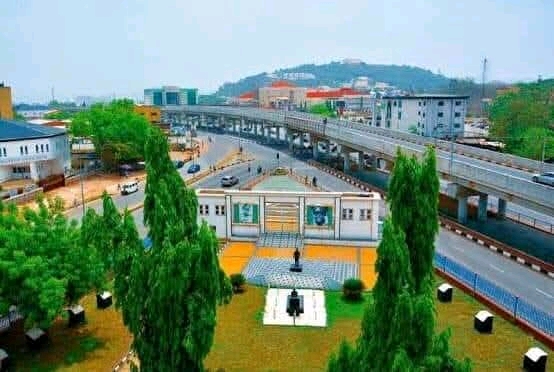
I was in Ado-Ekiti yesterday. It was my first time in the city since 2008—after eighteen solid years. What I saw didn’t just wow me; I didn’t know when I muttered a curse on the government of Ondo State. Ha! Same Ado-Ekiti that we used to call “the accidental state capital” because of its narrow roads and old buildings?
I journeyed through OSUA/UNAD (now EKSU) between 1999 and 2004. The state was just three years old when I gained admission. Ado-Ekiti was barely more than a village. I and a few close friends used to mock the state’s lack of resources. It was a common joke that where Ondo State had oil, Ekiti state had “yams and a university” as resources.
Ondo State was created in 1976. Ekiti State was created in 1996. 30 years later, Ado-Ekiti is far more developed than Akure. All the major road arteries have been dualized. City limits have expanded in every direction. Old brown-roofed houses have given way to new low-rise buildings. Even the fast food and supermarket chains we know in Akure are bigger, brighter and better in Ado-Ekiti. Let’s not mention the nightlife. Akure typically goes to sleep by 9pm. At 12am, Ado-Ekiti still bustles with almost as much energy it does during the day.
What happened to Ondo State? What happened to Akure?
I have asked myself these questions over and over again since last night. And the more I think about it, the more uncomfortable the answers become.
Because this is not about geography. It is not about destiny. It is certainly not about “resources”. That’s just a lazy excuse we have weaponised for decades. If anything, history should have favoured Akure. Ondo State is an older state and had an earlier start with deeper administrative roots, proximity to economic corridors. Even oil, for heaven’s sake.
Yet here we are… trailing like a lap dog in everything behind a landlocked state with no petrodollars and a smaller population
Somehow, a state we once dismissed as having no more than “yams and a university” quietly sat down, rolled up its sleeves, and began to build. No noise. No unnecessary drama. Just steady, visible, deliberate progress.
Meanwhile, we… talked.
Our governors held meetings about meetings. They set up committees to review white papers on abandoned projects. They signed MOU after MOU. We politicised everything until governance itself became a spectator sport. Every new administration arrived like a messiah and left like a broken promise.
Let’s be honest with ourselves: this did not happen overnight.
While Ekiti State University (the same UNAD we once joked about) grew in stature and pulled development along its spine into the host city, what did we do with our own advantages? Where is the coordinated urban vision for Akure propelled by FUTA? EKSUTH does not only contribute to the healthcare of Ekiti State, the sprawling hospital complex is also an astounding aesthetic landmark in the city. Where is our UNIMEDTH? Our Mother and Child hospitals have become decrepit shadows of past glory. Where is the continuity of policy? Where is the pride of place?
Instead, what we have perfected in Ondo State is the art of starting afresh every four years, like a cursed ritual. A governor comes, demolishes what he met, not always physically, but institutionally. Another comes, abandons what was started. Projects become political trophies instead of public goods. Roads are constructed not because they are needed, but because they can be commissioned before elections. This current governor even reconstructs roads that are in good condition at the expense of roads that need urgent attention.
And the people? We clap. We argue. We defend “our own.” We normalise mediocrity.
Let me say something that may sound harsh: Akure did not stagnate by accident. It was neglected—systematically, consistently, almost deliberately.
Because development is not magic. It leaves fingerprints. You can see it in road networks, in urban planning, in the discipline of execution, in the quiet confidence of a city that knows where it is going. That is what I saw in Ado-Ekiti.
Not perfection…no. Intentionality.
I saw a city that has decided, collectively, that it will not remain small simply because it started small. And that is the painful part. Because nothing I saw there is beyond us in Ondo State. Nothing. If anything, Ondo State should be leading this conversation across the Southwest, not playing catch-up with a state we once laughed at.
So again, I ask: What happened to Ondo State?
The answer is not far-fetched. It is in our politics. It is in our leadership culture. It is in our tolerance for half-measures and our allergy to criticism. But more importantly, it is in us, the people, who have refused, for too long, to demand better.
Until that changes, we will keep travelling to places like Ado-Ekiti, shaking our heads in disbelief, and returning home to the same tired conversations. And perhaps, muttering the same quiet curses under our breath.
Olaitan Adesina is a poet and creative writer. He writes from Akure.