
Oba Olu Falae’s life mirrors Nigeria’s journey, says Mimiko By Lai Gidado
Oba Olu Falae’s life mirrors Nigeria’s journey, says Mimiko
By Lai Gidado
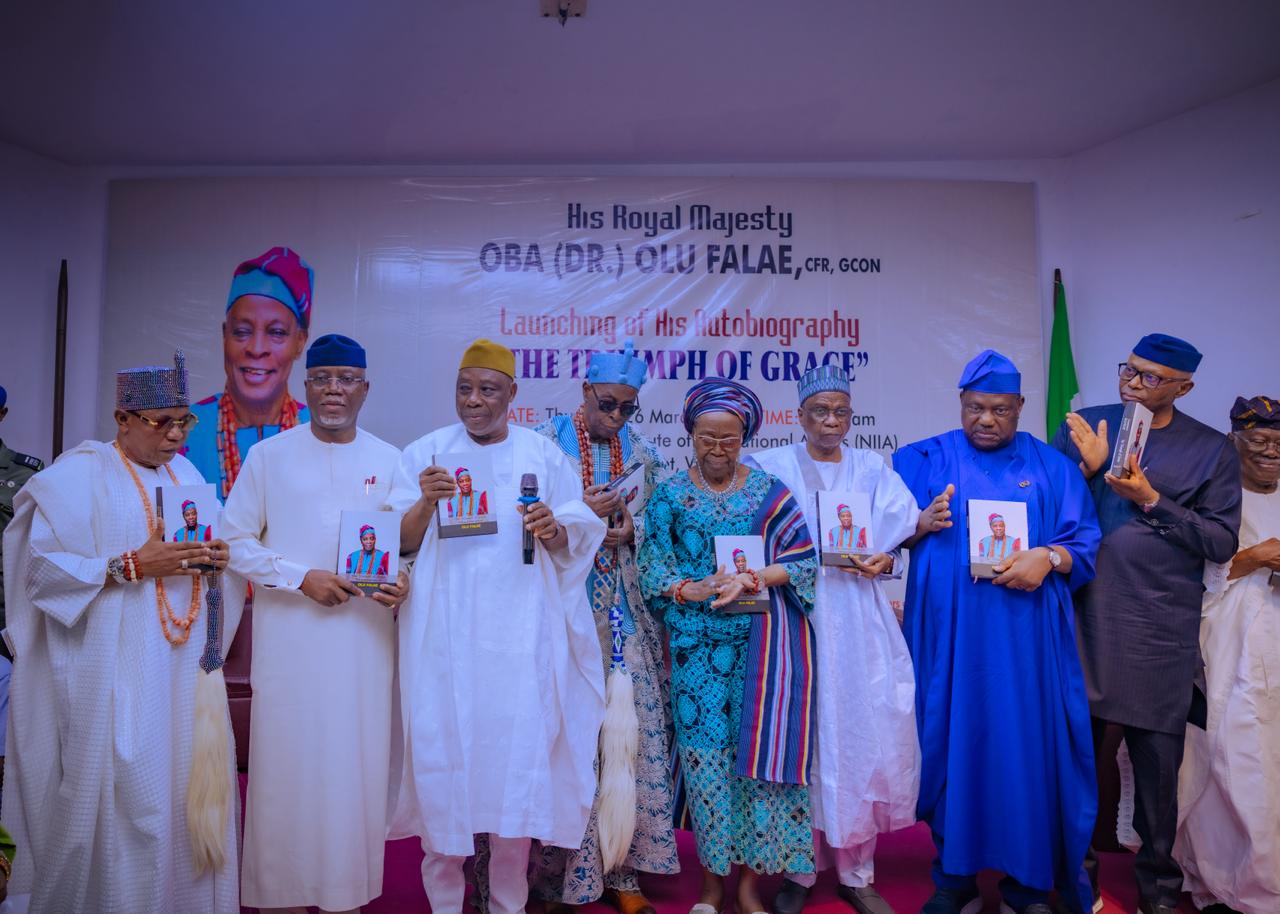
Former Ondo State Governor, Olusegun Mimiko, has described The “Triumph of Grace”, the autobiography of elder statesman, Oba Olu Falae, as a significant addition to Nigeria’s political and historical literature.

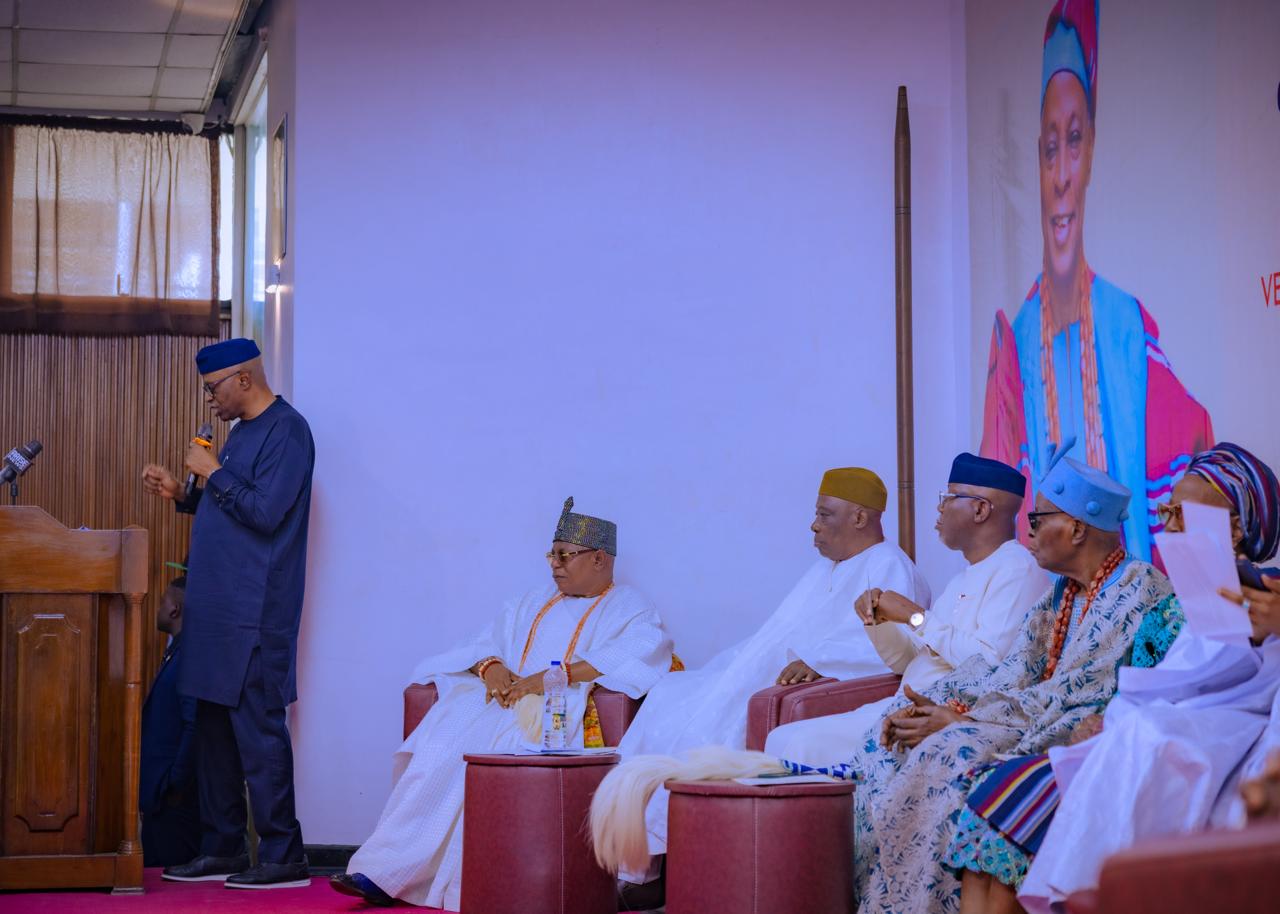
Speaking while reviewing the book at its presentation in Lagos on Thursday, Mimiko said the autobiography provides rare first-hand insight into the political, economic and ideological developments that have shaped Nigeria over the past five decades.
The book chronicles Falae’s journey from childhood to the heights of public service, politics, business and traditional leadership. According to Mimiko, the work goes beyond a personal memoir.
“This is not merely a memoir, but a window into some of the defining political, economic and ideological currents that have shaped modern Nigeria,” he said.

Mimiko noted that Falae’s career intersected with several defining moments in Nigeria’s history, including post-independence development planning, the civil war era, the Structural Adjustment Programme, the June 12 struggle, the 1999 transition and the 2014 National Conference.
He highlighted the autobiography’s account of Falae’s early life, including the loss of his mother at the age of eight and how he was raised by his grandmother while his father remained committed to his education.
He also praised Falae’s academic excellence and early involvement in student activism, particularly protests against the Anglo-Nigerian Defence Pact, one of the first major student uprisings after independence.
Mimiko said the book also reflects a period when discipline and merit defined Nigeria’s school system, recalling Falae’s story of how the late Sir Adesoji Aderemi and then Minister of Education, J.O. Odebiyi, were once denied access to their children because it was not a visiting day.
On Falae’s civil service career, the former governor said the autobiography details the standards that characterised the early post-independence public service, including Falae’s role in drafting the Mid-West Regional Development Programme and his rise to Permanent Secretary before the age of 39.
Mimiko said the book revisits major national crises such as the Western Region crisis, the 1966 coups, the civil war and the post-war cement armada.
He noted that Falae later chaired a committee set up by former Head of State, Olusegun Obasanjo, to resolve the port congestion that left hundreds of ships stranded at sea.
A major theme of the autobiography, he added, is Nigeria’s failure to sustain sound economic planning and long-term policy implementation.
Mimiko cited Falae’s reflections on abandoned proposals, including plans to invest Nigeria’s foreign reserves through a sovereign investment vehicle and projected power sector expansion that could have transformed the economy.
On his role in the military government, Mimiko said Falae addressed the long-held belief that he was one of the architects of the Structural Adjustment Programme, clarifying that its conceptual framework had been developed before his appointment, though he later promoted and defended the policy.
The autobiography also provides fresh details about Falae’s involvement in the transition programme of Ibrahim Babangida, his detention during the regime of Sani Abacha, and his emergence as the presidential candidate of the Alliance for Democracy–All Peoples Party alliance in the 1999 election.
Mimiko said the book sheds light on the political manoeuvres that led to Falae’s emergence as candidate and the divisions that followed within the South-West political establishment.
He also described as significant Falae’s account of the 2014 National Conference and the work of the Southern and Middle Belt Forum in advocating restructuring and fiscal federalism.
He drew attention to the chapter on Falae’s kidnapping on September 21, 2015, describing it as one of the most dramatic sections of the book.
“In the final analysis, The Triumph of Grace is not merely the story of one man’s life. It is a narrative interwoven with the history of modern Nigeria, its struggles, missed opportunities, achievements and enduring hopes,” Mimiko said.
He added that the book would serve as a valuable resource for students, scholars, historians and young Nigerians seeking lessons in leadership, public service and national development.