

USA/Israel – Iran War: When Two Elephants Wrestle… By Prof. M.K. Othman
USA/Israel – Iran War: When Two Elephants Wrestle…
By
Prof. M.K. Othman
While the term “war” may suggest a confrontation between equals, the USA/Israel-Iran conflict is marked by a significant imbalance in power and resources. Thus, a more accurate analogy would be a struggle between a cat and a rat, emphasizing Iran’s disadvantage. Still, international conflicts are complex, often defy logic, and are rarely resolved by force alone; the ‘might-is-right’ doctrine does not hold water. The Middle East crisis must be understood through the lens of these imbalances and complexities, forming the basis of this analysis.
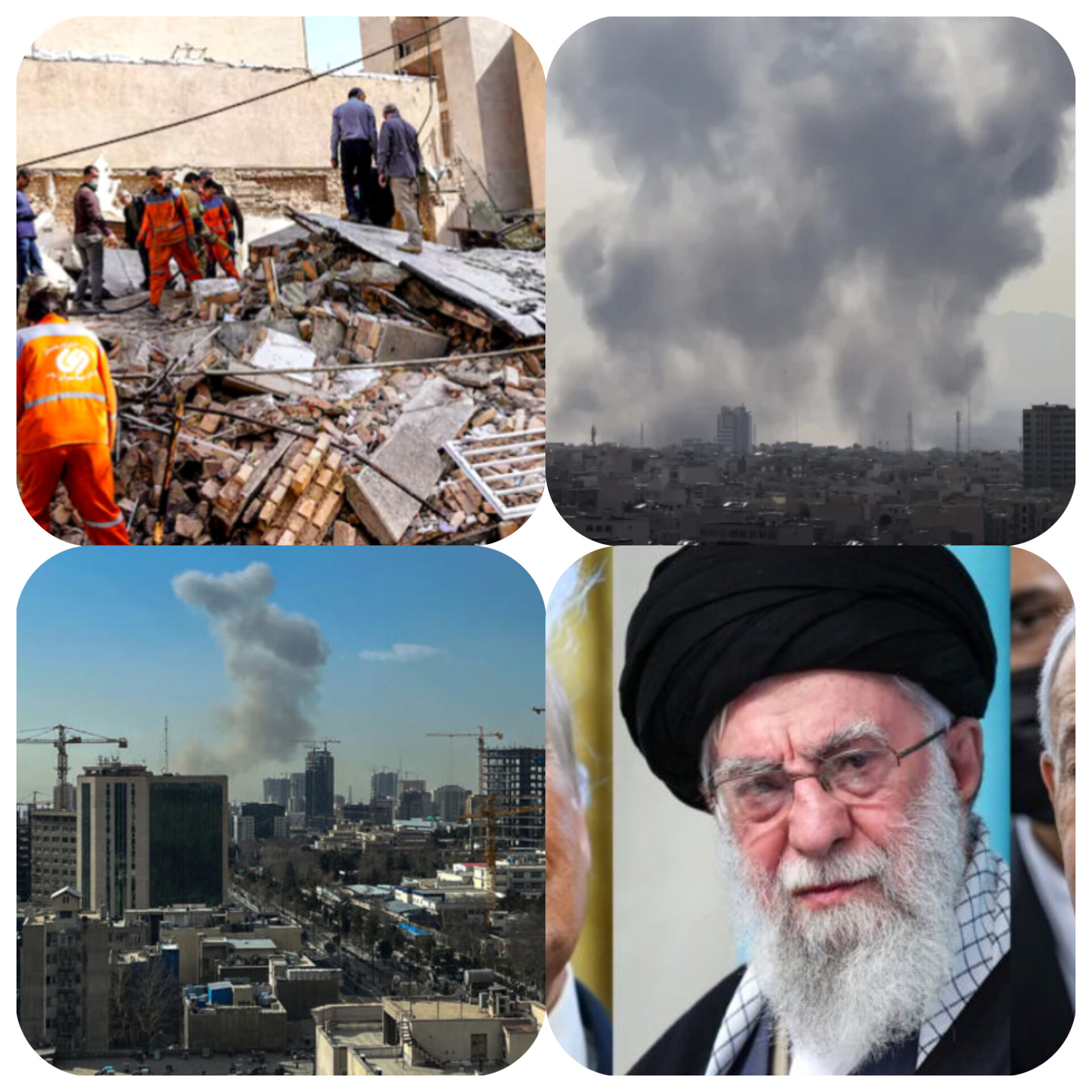
On February 28, 2026, the world experienced a seismic shift, one that many people did not immediately understand but has since become painfully clear. What started as coordinated military strikes by the United States and Israel against Iranian targets quickly escalated into a full-scale regional crisis. Tensions have risen, involving various parties from around the world, sending shockwaves far beyond the Middle East. From the busy streets of Tehran to the resilient neighborhoods of Tel Aviv and the peaceful creeks of the Niger Delta, the impacts of this conflict are unfolding at a troubling pace. For Nigerians, the war may seem geographically distant, but its effects hit close to home. As the African proverb says, “When two elephants fight, it is the grass that suffers.” Today, the “grass” includes millions of ordinary Africans who had no part in this conflict but are forced to carry its burdens.
In the immediate aftermath of the strikes, retaliation was swift. By March 2, missile exchanges intensified; urban centers in Israel found themselves under fire while Iran faced relentless bombardments of its strategic installations. The tragic toll on civilians began to rise, and by the third week of the conflict, over 1,500 people had been reported killed in Iran alone, with more than 1,000 deaths recorded across Lebanon and the surrounding conflict zones. These are not just numbers—they represent families torn apart, livelihoods shattered, and futures irrevocably changed. In Israel, communities braced for the wail of air raid sirens; meanwhile, in Iran, the targeting of energy infrastructure left many grappling with power outages and economic paralysis. The human cost, as we know all too well, is felt not by distant policymakers but by ordinary men, women, and children caught in the crossfire.
On March 13, the conflict escalated dramatically when the United States launched a significant strike on Kharg Island, a crucial hub for Iranian oil exports. This attack devastated key facilities and made a bold statement about the stakes involved. Soon after, Israeli forces targeted the South Pars gas field—one of the largest globally—disrupting substantial portions of Iran’s gas production. These manoeuvres were not just military blunders; they were strategic plays in a complex global chess game where energy, security, and economic leverage are deeply intertwined. In retaliation, Iran intensified its actions in the Strait of Hormuz, a narrow but essential passage for about one-fifth of the world’s oil supply. Shipping traffic plummeted by as much as 70%, leading to panic in global markets and exposing just how interconnected our world has become.
For Nigeria, the crisis had immediate and severe effects. As the conflict escalated in late February, petrol prices were already a major concern, ranging between ₦730 and ₦880 per liter. Within weeks, those prices skyrocketed, reaching between ₦1,270 and ₦1,400 per liter in different regions. These price increases left many commuters stranded and transport operators struggling to adjust fares. The impacts were significant, with higher transportation costs pushing up food prices. Average Nigerians now find that their salaries buy much less than they did just a few weeks earlier. This stark reality highlights Nigeria’s vulnerability, even as an oil-producing country, to global price shocks stemming from its reliance on imported refined products. It’s high time to shift from import dependence to local production, thanks to Dangote Refinery.
The world beyond Nigeria narrates a story of volatility and concern. Crude oil prices, which were once stable, surged past $119 per barrel during the height of the conflict, then fluctuated around $100 as talks of a fragile ceasefire emerged. In the United States, fuel prices climbed to about $5.37 per gallon (roughly ₦2,000 per liter) in some areas, while diesel prices increased sharply, placing additional strain on farmers and transport companies. Across the Atlantic, UK drivers faced petrol prices near £1.50 per liter, with diesel approaching £1.74 per liter. Although these numbers may seem distant, their effects ripple through the costs of imported goods, aviation fuel, and inflation pressures across economies worldwide. In Nigeria, where inflation was already a significant concern, these extra burdens have pushed many households even closer to the edge.
Beyond the financial implications, the conflict has sharply highlighted the divisions within the international community. Countries are now treading carefully as they navigate a complex web of alliances, interests, and moral principles. Some nations align fully with the United States and Israel, citing security concerns, while others sympathize with Iran’s struggle, supporting sovereignty and resistance to foreign pressure. Many African nations and other countries in the Global South are taking a cautious approach, hesitant to choose sides in a conflict that ultimately affects them. Diplomatic efforts to mediate and reduce tensions have intensified, with countries like Pakistan, Turkey, and Egypt seeking to act as peacemakers; however, trust remains fragile, and a lasting solution seems out of reach.
History provides crucial lessons. The Vietnam War and the prolonged conflict in Afghanistan remind us that military interventions—however well-intentioned—often produce far more complex and painful outcomes than anticipated. Vietnam bears the scars of extensive fighting and environmental destruction without achieving political stability. In Afghanistan, a 20-year engagement ended in withdrawal, leaving behind more questions than answers. These experiences teach a fundamental truth: once unleashed, war rarely follows a predictable path and often leaves behind a legacy of suffering long after the fighting ceases.
We must also recognize the ongoing importance of Machiavellian principles in international relations. The idea that the end justifies the means has guided state actions for centuries, especially during conflicts. However, even within this framework, there is a critical need for caution and foresight. Unchecked power can undermine the very peace it seeks to create. Targeting critical infrastructure may offer immediate tactical benefits but also raises serious humanitarian and ethical concerns, especially when civilians—whose lives are beyond decision-makers’ control—bear the brunt of the consequences.
For many Nigerians, the ongoing conflict is not just an abstract geopolitical debate; it is a harsh daily reality reflected in rising fuel prices, soaring food costs, and an uncertain future marked by fear. Transport fares have doubled in some areas, while small businesses struggle with soaring operational costs. Families are forced to make difficult choices about how to divide their limited resources. The psychological toll is also heavy, as instability abroad fuels local anxieties and heightens insecurities about what tomorrow may bring. In a world so interconnected, geographical distance offers little relief from conflict, and the sounds of war carry with them their economic and social consequences.
Yet, amid this turmoil, there remains a glimmer of hope for reflection and action. Recent signals pointing towards a potential ceasefire bring a breath of relief amid the chaos, hinting that diplomacy might still play a role. The challenge lies in reshaping these initial signs into concrete steps towards de-escalation and open dialogue. Sustained engagement, confidence-building measures, and a commitment to safeguarding civilian infrastructure will be essential for meaningful efforts to end this crisis. Equally critical is the need for an inclusive approach to global governance, one that genuinely considers the interests and perspectives of nations in the Global South, which often bear the brunt of decisions made beyond their borders.
In considering the path forward, it is crucial to focus on how this conflict is ultimately resolved and at what cost—especially to those far removed from decision-making. The central question, as this analysis underscores, is whether its aftermath will perpetuate instability or catalyze greater efforts for a more equitable world order. This demands that the global community prioritize collaboration and dialogue over hostility, echoing the main argument that the peripheral bear the greatest burdens of great power conflict.
Ultimately, the narrative of the US/Israel-Iran conflict transcends battlefields in the Middle East and power corridors in Washington. It is also being written in the bustling markets of Lagos, the fuel stations of Abuja, Kwara, and Katsina, and in the homes of ordinary Nigerians in Benin City who must navigate the consequences of decisions made far beyond their horizons. This is a tale of interconnectedness, vulnerability, and resilience—an urgent reminder that, in our globalised world, the fate of one region is inextricably linked to that of another. When two elephants wrestle, the grass has no choice but to endure, hoping that the strife will soon give way to a peaceful and stable future.
All nations of goodwill must urgently unite, not only to call for an end to the ongoing conflict but to actively pursue negotiations, facilitate humanitarian aid, and hold leaders accountable for peace. Each of us—governments, institutions, and individuals—has a role to play in building solidarity and demanding decisive, coordinated action. The world must do better; it is time to replace words with meaningful deeds and ensure this ill wind never rises again.