
Middle East Inferno and the Myth of Democratic Intervention By Olaitan Adesina

Middle East Inferno and the Myth of Democratic Intervention
By Olaitan Adesina
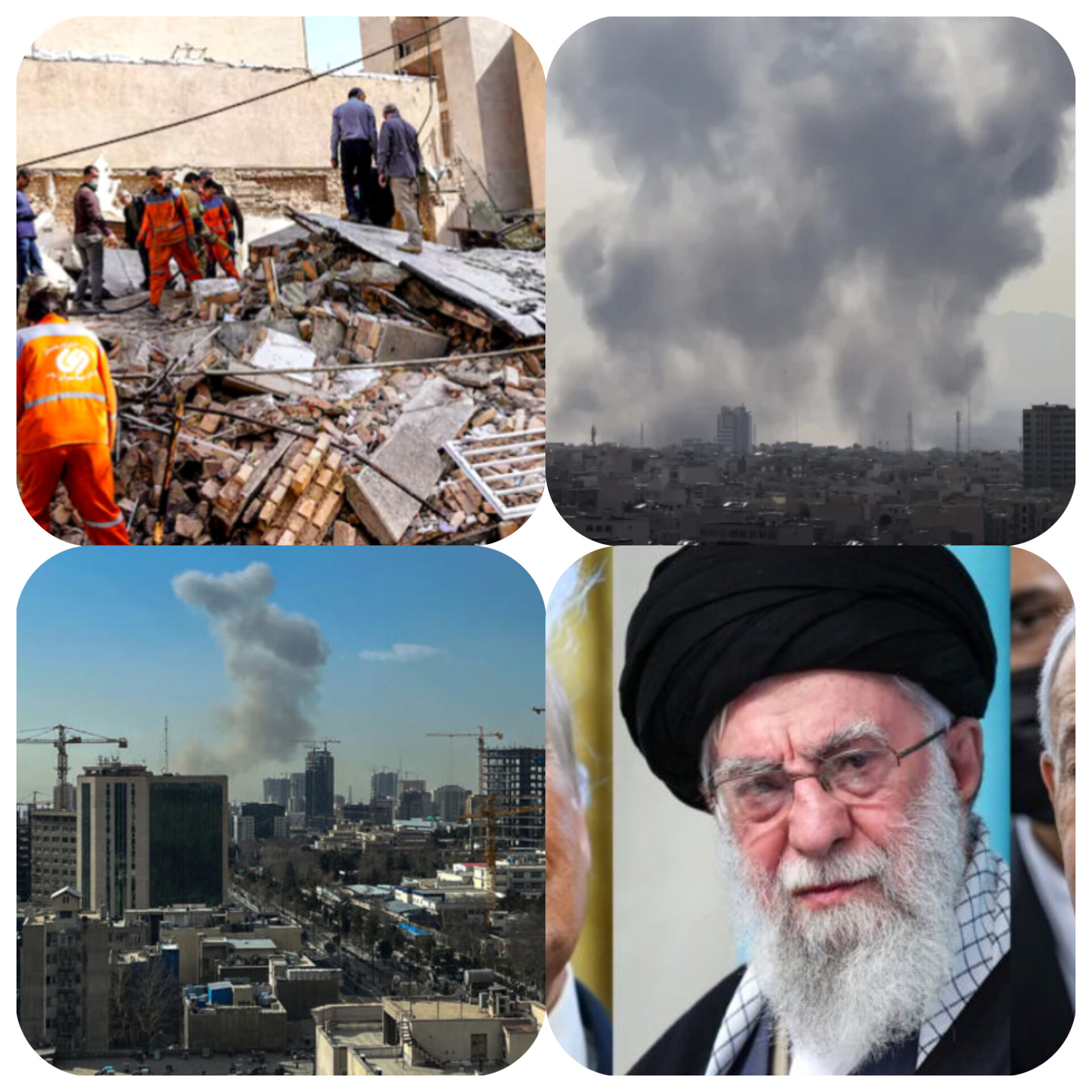
The latest confrontation involving United States, Israel and Iran has once again exposed the moral inconsistency at the heart of global power politics. Washington speaks the language of democracy with conviction, yet its closest partners in the region include unelected monarchies such as Saudi Arabia, United Arab Emirates, Qatar and Oman. The contradiction is no longer subtle. It is structural. It is strategic. And in moments like this, it is dangerous.

Airstrikes that shook Tehran did not merely target military infrastructure. They ruptured an already fragile regional balance. Iran’s retaliatory missile exchanges confirmed that the threshold for direct confrontation between states has been crossed. Yet the single development that has altered the trajectory of the crisis most profoundly is the reported killing of Ali Khamenei. The removal of Iran’s supreme authority is not just a military outcome. It is a political earthquake whose aftershocks will reverberate far beyond Iran’s borders.
Power vacuums in ideologically driven states rarely produce moderation. They produce contestation. Competing factions within Iran’s clerical and military establishment now face a struggle not only for authority but for legitimacy. In such moments, external confrontation often becomes a tool of internal consolidation. The possibility of a more aggressive posture from hardline elements cannot be dismissed. Equally troubling is the prospect of fragmentation within Iran’s chain of command, a scenario that could embolden regional proxies and widen the theatre of conflict across multiple fronts.
The symbolic impact of the killing is already shaping perceptions across the Middle East. For many, it reinforces a narrative of existential struggle rather than strategic rivalry. Conflicts sustained by symbolism rarely end quickly. They deepen. They harden. They spread.

Economic consequences followed with predictable speed. Anxiety over the security of oil shipments through the Strait of Hormuz has unsettled global markets. Energy price volatility threatens fragile economies and amplifies inflationary pressure across continents. For countries dependent on imported fuel, the crisis is not an abstract geopolitical contest but a direct threat to domestic stability. The Middle East’s instability once again becomes the world’s economic burden.
Security calculations across the region are shifting in real time. U.S. military installations in the Gulf operate under heightened vulnerability. Israel confronts the prospect of multi directional retaliation. Regional governments that once balanced cautiously between rival powers are being forced into sharper alignments. Diplomatic appeals from the United Nations reflect urgency but reveal limited influence in the face of preemptive force.
Global power competition is also being recalibrated. Russia and other actors are positioning themselves as alternative brokers of stability, exploiting the perception of Western unilateralism. The conflict is no longer confined to geography. It is embedded in a wider contest over influence, legitimacy and the future architecture of global order.
At the core of this crisis lies a persistent illusion. The claim that military engagement is a pathway to democratic transformation has repeatedly collided with geopolitical reality. Strategic alliances in the Middle East have historically been determined by energy security, military positioning and balance of power considerations. Political reform has remained secondary, often rhetorical, occasionally expendable.
The consequences of that approach are now unfolding in stark clarity. A region already burdened by unresolved wars faces another cycle of escalation. The killing of Iran’s supreme leader has intensified uncertainty within a system built on ideological continuity. The economic shock threatens global stability. The security risks extend across continents.
What remains is a familiar lesson that power continues to resist. Stability cannot be engineered through selective principles. Influence secured through contradiction breeds resentment, not order. The Middle East does not lack interventions. It lacks consistency, restraint and a credible commitment to diplomacy that extends beyond strategic convenience.
Until global powers confront the gap between what they proclaim and what they practice, each conflict will merely prepare the ground for the next. The current crisis is not only a confrontation of states. It is a reckoning with the limits of force in a region where history remembers every inconsistency and every intervention.
_Olaitan Adesina is a poet and author of Agidigbo: Soliloquy in Verse. He writes from Akure._