

Nigeria’s deadly insecurity: A chat with Col. F. S. Saka (Rtd)

Nigeria’s deadly insecurity: A chat with Col. F. S. Saka (Rtd)
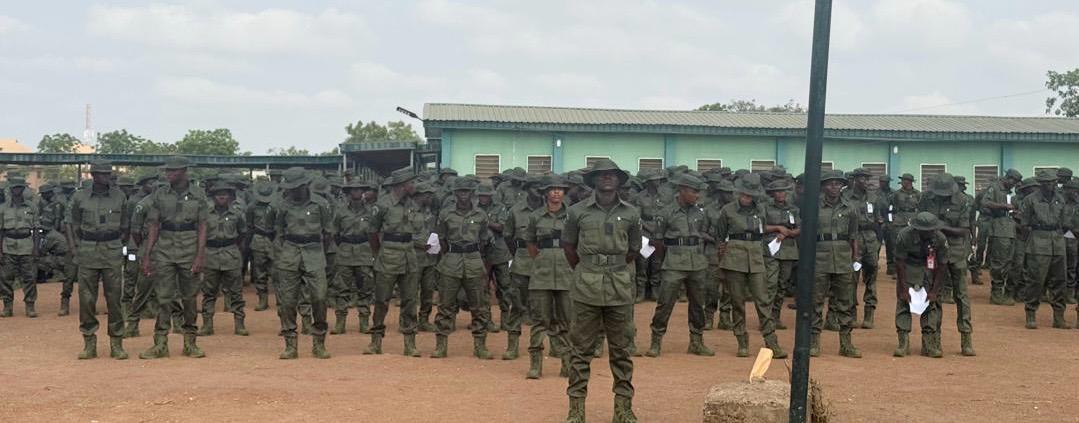
Nigeria’s worsening insecurity has once again taken centre stage in national discourse, following renewed waves of killings and violent attacks across several states, leaving hundreds dead and entire communities traumatised.
Benue, Kwara and Plateau states have been among the hardest hit, recording mass casualties in assaults attributed to bandits, terrorists and organised criminal gangs.

Despite repeated assurances by successive governments to halt the bloodshed, the carnage has persisted, raising grave concerns about the effectiveness of the nation’s security architecture.
In a bid to unravel the root causes of the crisis and identify practical solutions, The Ebony Herald International Magazine spoke with respected security analyst and retired military officer, Lt-Colonel Foluso Sunday Saka.
His analysis laid bare the deep-seated socio-economic, political and institutional failures fuelling Nigeria’s worsening security challenges.

Colonel Saka attributed part of the crisis to climate change, which, he said, has disrupted traditional grazing patterns and intensified competition for land and resources.
“Climate change has made the old method of cattle rearing unsustainable. In today’s world, animals should no longer be moved across long distances.
Modern ranching and zero-grazing systems are the global standard.
“If Nigeria adopts this approach, farmer-herder clashes will reduce drastically,” he said.
Beyond environmental factors, the retired officer blamed political mismanagement, corruption, injustice and weak policing.
“The way politics is practised in Nigeria, combined with corruption and lack of accountability, has emboldened criminals. When offenders are not punished, insecurity thrives,” he noted.
He added that the Nigeria Police Force lacks the manpower, training and intelligence capacity required to secure the vast country effectively, stressing that poor intelligence gathering has further weakened security operations.
According to him, insecurity will persist unless the government demonstrates strong political will to tackle its root causes decisively.
“Globally, huge investments are made in feed production, enabling zero-grazing. Nigeria must embrace this system. It will significantly reduce violent clashes,” he said.
On corruption, Saka urged the government to introduce policies that would ensure agricultural funds reach genuine farmers rather than political beneficiaries.
“Resources meant for farmers often end up in the hands of people who have no knowledge of agriculture. This must stop,” he said.
The retired colonel warned against using religion or ethnicity to justify criminal actions.
“No religion permits violence. While faith is important, no one should break the law and hide under religious or ethnic identity. Government policies and the constitution must remain supreme,” he stated.
He also urged government officials to remain neutral in handling national issues, stressing that tribal bias undermines justice, fairness and unity.
“The constitution allows Nigerians to live anywhere in the country. Government must enforce this provision without discrimination,” he added.
Saka called for sweeping reforms within the Nigeria Police Force, including retraining, improved welfare and zero tolerance for corruption.
“Any officer who commits an offence must be prosecuted. Corruption within the force weakens public trust and operational effectiveness,” he said.
He further criticised delays in judicial processes, arguing that slow trials promote impunity.
“Justice delayed is justice denied. Courts must conclude cases within reasonable timeframes to serve as effective deterrents,” he said.
The security analyst advocated stronger grassroots intelligence systems through community policing and collaboration with local vigilantes.
“Each local government should operate a security command centre for intelligence gathering. Vigilantes understand their environment and can provide timely information, while the police and military respond to emergencies,” he explained.
He stressed that despite the acquisition of sophisticated military hardware, insecurity persists because underlying socio-economic and intelligence gaps remain unaddressed.
“Buying weapons without tackling poverty and intelligence failure is ineffective,” he noted.
Saka also called for massive deployment of technology for surveillance, intelligence tracking and border security.
“With drones, satellite imaging and digital surveillance, security agencies can monitor movement, intercept arms supply routes and dismantle criminal networks,” he said.
The retired officer stressed that empowering young people through education, vocational training and interest-free loans would significantly reduce criminal recruitment.
He further emphasised the importance of free and quality education at all levels, alongside civic and security awareness programmes, as critical tools in curbing crime.
The former combatant soldier called for comprehensive security sector reforms, improved welfare for personnel, modern training and advanced equipment.
“Technologies such as drones, satellites, GIS and artificial intelligence must be fully integrated into Nigeria’s security framework,” he said.
He urged a total overhaul of the Nigeria Police Force in line with existing reform recommendations, stressing that the police must assume their role as the primary internal security agency.
Saka also advocated decentralization of security management, suggesting that large transport parks and ungoverned spaces be placed under state supervision to improve monitoring.
Finally, he stressed the urgent need to tackle poverty and rehabilitate road infrastructure to ensure swift response by security agencies.
“Without addressing poverty and infrastructural decay, insecurity will continue to resurface,” he concluded.