When Giants Clash: The Echoes of War and the Price Humanity Pays By Dikko Falilat Kehinde
When Giants Clash: The Echoes of War and the Price Humanity Pays
By Dikko Falilat Kehinde
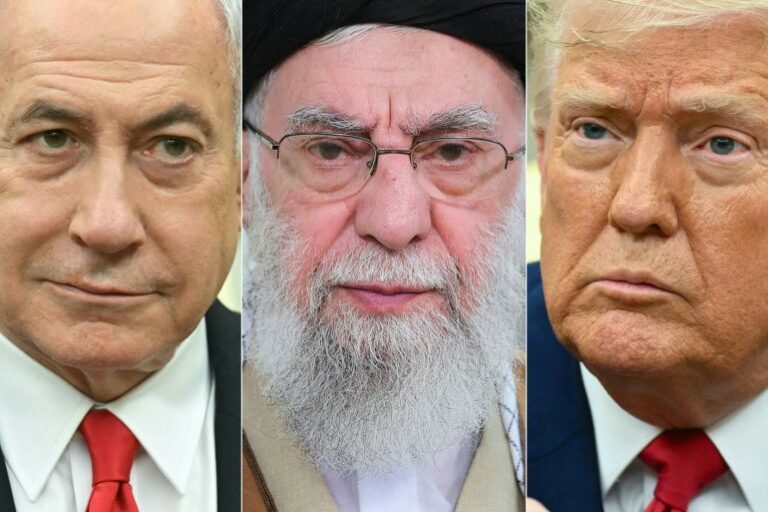
War, they say, is like fire, once it starts, it consumes not only the dry grass but also the green. Today, the rising tensions among United States, Iran, and Israel remind the world of an old truth: when elephants fight, it is the grass that suffers. War has a way of announcing itself like distant thunder—first ignored, then feared, and finally unavoidable. This is not a sudden quarrel between strangers; it is a long-brewing storm, heavy with years of suspicion, rivalry, and unresolved tensions. And like every storm in history, it carries consequences far beyond the place where it begins.
If we are honest with ourselves, this is not new. The world has walked this road before, many times, and each journey has left deep footprints of pain. From the devastating shadows of the World War I to the catastrophic aftermath of the World War II, humanity has repeatedly tested the limits of destruction. The Vietnam War dragged on for years, consuming lives and leaving behind a country struggling to heal. The Iraq War reshaped an entire region, but not in the way many had hoped. Even closer to home, the Nigerian Civil War reminds us that the wounds of war do not simply disappear with time; they linger, sometimes quietly, sometimes loudly, but always present.

So when we look at the current tension, we must resist the temptation to see it as just another headline. It is a continuation of a pattern—one where nations act in the name of security, power, or survival, but often end up creating a cycle that is difficult to break. Israel insists it must defend itself at all costs. Iran stands firm in its resistance against what it sees as external aggression. The United States positions itself as both a protector and a power broker. Each side has its reasons, its justifications, its narrative. Yet, as history has shown time and again, when everyone is right in their own eyes, the outcome is often wrong for everyone involved.
What makes this situation even more dangerous is how easily it can spread. War, like a crack in a wall, rarely stays in one place. It widens, pulling in others, turning neighbors into participants and bystanders into victims. The Middle East, already a region of fragile balance, becomes even more volatile with every exchange of threats or strikes. And in today’s interconnected world, no region suffers alone. The ripple effects travel fast—through economies, through politics, through the daily lives of ordinary people thousands of miles away.
Take a country like Nigeria, for instance. Many may think such a conflict is distant, something happening “over there.” But the reality is different. When tensions rise in oil-producing regions, fuel prices do not ask for permission before increasing. The cost of living does not wait for diplomatic solutions. Markets react, businesses struggle, and the average citizen feels the weight in ways that are both immediate and personal. It is like a stone thrown into a river—the splash may be local, but the ripples travel far.

Beyond the economics lies the deeper, more painful cost—the human cost. War has a cruel way of turning people into numbers. Casualty figures are announced, statistics are shared, and over time, the world becomes desensitized. But behind every number is a life interrupted. A child who should be learning in a classroom learns instead how to recognize the sound of sirens. A mother who once worried about school fees now worries about survival. A father who planned for the future now struggles to protect the present.
It is often said that when elephants fight, the grass suffers. In modern warfare, the grass is not just the immediate population; it is humanity itself. Societies begin to crack under pressure. Trust erodes. Fear replaces hope. Institutions that hold communities together—schools, hospitals, governance structures—begin to weaken or collapse. And when these foundations are shaken, rebuilding them is not just a matter of time; it is a matter of generations.
Even those who survive physically are not untouched. War leaves marks that cannot be seen. Soldiers return home, but parts of them remain on the battlefield. Civilians carry memories that refuse to fade. Trauma becomes a silent companion, shaping lives long after the last shot has been fired. In this way, war does not end when the guns go quiet; it lingers, echoing in the minds of those who lived through it.
The current situation between the United States, Iran, and Israel reflects a fragile balance, one that can tip at any moment. Ceasefires may be announced, but they often feel like a pause rather than a resolution—a brief silence in a conversation that is far from over. Words are exchanged, but so are warnings. Actions are taken, but so are retaliations. It is a delicate dance, and one misstep could change everything.
Looking ahead, the possibilities are both clear and uncertain. The conflict could stretch into a prolonged period of tension, where neither side fully commits to peace nor escalates into full-scale war. It could expand, drawing in other nations and turning a regional issue into a global crisis. Or, though less likely, it could lead to meaningful dialogue and a path toward stability. But history urges caution. It reminds us that wars often start with confidence and end with regret.
At its core, this is more than a political or military issue. It is a human story—one that forces us to confront difficult questions about power, responsibility, and the value of life. Because when all is said and done, when the dust settles and the headlines fade, the reality remains simple and sobering: no one truly wins a war. Victory may be declared, territories may change hands, and narratives may be written, but the losses—human, economic, and emotional—are shared by all.
Perhaps the greatest tragedy is that these lessons are not new. They have been written before, in different times and places, with different names and faces. Yet, here we are again, standing at the edge of another possible chapter, hoping, perhaps, that this time the story will end differently.
But hope alone is not enough. History has shown that without wisdom, restraint, and genuine commitment to peace, the cycle continues. And if there is anything humanity can no longer afford, it is another war whose cost will be counted not just in billions of dollars, but in broken lives and lost futures.
Dikko Falilat Kehinde
Author | Public Affairs Analyst | Writer | Accountant
Writing from Lagos, Nigeria
📞 Phone: 07034484445
📧 Email: Kehindedikko@gmail.com
For professional inquiries, analysis, and writing engagements, contact as above.