


Where Culture Meets Social Media and Misunderstanding: The Ebira Masquerade Experience Farouk Ozigi Onimisi (The White Orator)

Where Culture Meets Social Media and Misunderstanding: The Ebira Masquerade Experience
Farouk Ozigi Onimisi
(The White Orator)
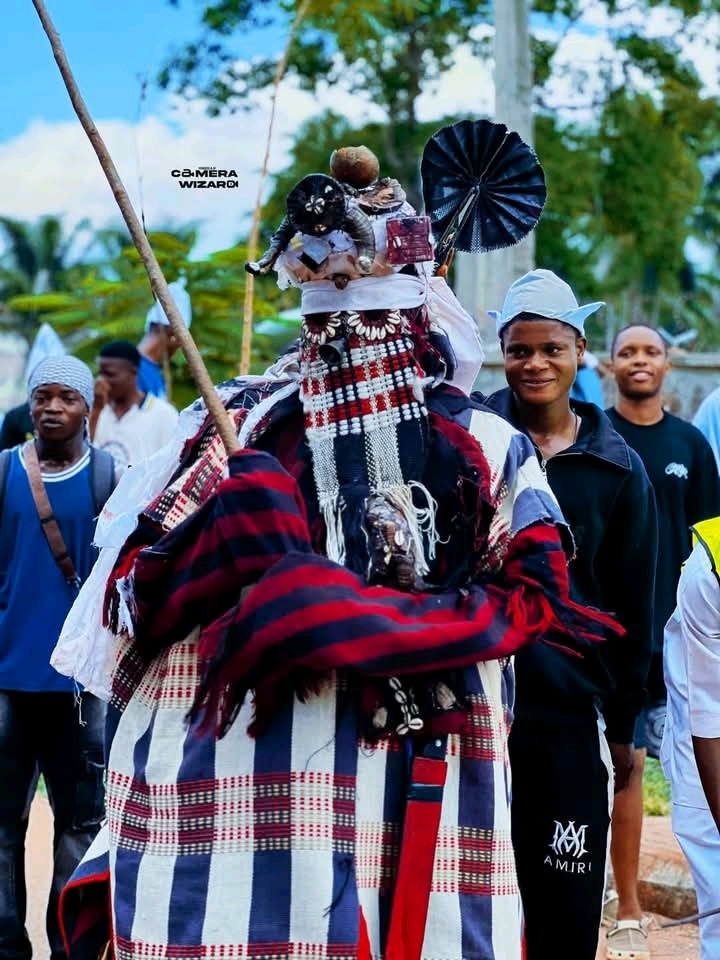
Before you read, note that the attached images are for cultural understanding. The images frame the discussion on tradition, boundaries, and respect.

Culture is not a decoration worn when convenient and discarded when it becomes uncomfortable. It is the memory of a people, the record of their journey, and the framework through which they understand the world. Once culture is weakened or ridiculed into extinction, identity follows shortly behind. This reality confronts the Ebira people today more urgently than ever before.
Among the Ebira, culture has never existed merely for entertainment. It is a living system of values, symbols, and institutions that regulate communal life. Central to this system is the masquerade institution, a long-standing cultural authority that predates modern governance structures. Masquerades are not random figures roaming the streets; they are regulated expressions of tradition, each with defined roles, limits, and meanings. Some are celebratory, some corrective, some symbolic, and others strictly ritual. The diversity within the institution is intentional and foundational, not chaotic.
Unfortunately, in recent times, this institution has come under sustained attack, not through informed debate but through sensationalism, misrepresentation, and selective moral outrage. A number of self-styled religious commentators, empowered by social media, have taken it upon themselves to label Ebira masquerades as evil, backward, or demonic. These condemnations are often loud, emotionally charged, and dangerously shallow. They ignore history, dismiss context, and refuse to acknowledge that culture, like society itself, is complex.

What makes this trend particularly troubling is its hypocrisy. The same voices that condemn Ebira masquerades are often quick to celebrate other people’s cultures. They applaud foreign carnivals, admire Asian ancestral rites, and praise European cultural parades. Within Nigeria, they proudly celebrate festivals like the Eyo in Lagos, branding them as heritage and tourism. But when it comes to Ebira culture, the language suddenly changes. What is “heritage” elsewhere becomes “evil” at home.
This contradiction was laid bare just days ago during the Eyo Festival in Lagos State, towards the end of 2025. The festival, deeply rooted in Yoruba history and spirituality, was broadcast live on national television and attended by the President of Nigeria, Bola Ahmed Tinubu, alongside many dignitaries. At a particular moment, when specific masquerades—Adimu Orisa and Adamu Orisa—were about to be introduced, the media was instructed not to take photographs or record videos. Cameras were turned away. Media houses complied. Even presidential photographers did not dare violate the instruction. That boundary was respected without argument. No one protested. No one demanded explanations. Tradition spoke, and modernity stepped back.
Watching that moment live was both impressive and painful. Impressive because it showed a culture confident enough to set boundaries and a society disciplined enough to respect them. Painful because it highlighted how differently Ebira culture is treated. In Ebiraland, sacred expressions are filmed without consent, circulated online without context, mocked for engagement, and debated by people who neither understand nor respect them.
This erosion has been accelerated by recent events in Ihima. An incident occurred in which a masquerade figure hugged a woman wearing a niqob, an attire that fully covers the body and face and could, at a glance, be mistaken for a masquerade. The action was inappropriate and deserved condemnation and correction. There is no justification for harassment under any guisa, cultural or otherwise. However, what followed exposed a far deeper problem. The masquerade’s custodian was stripped naked and publicly humiliated. Images of the custodian responsible for the masquerade were circulated widely by bloggers and social media users, turning a local issue into a public spectacle.
What should have been addressed through community mechanisms and lawful processes became mob justice, digital shaming, and cultural scapegoating. This response was excessive, unlawful, and deeply dangerous. One misconduct cannot justify the destruction of dignity, nor should it be weaponised to discredit an entire cultural institution.
As if this was not alarming enough, the situation escalated further when the house of Ohireba Uhuodo, the highest traditional authority responsible for masquerade affairs in Ebiraland, was reportedly set ablaze. Even more disturbing was the alleged note left behind, one capable of stirring religious hostivity. At this point, the matter moved beyond cultural disagreement into the territory of security threats and potential communal conflict.
Any attack on traditional institutions, especially one framed with religious undertones, should concern every responsible authority. This is not something the government should treat lightly or dismiss as isolated anger. It must be clearly stated that culture and religion are not natural enemies. Many Ebira people practise their faith devoutly while still respecting tradition. The danger lies not in faith, but in extremism that demands cultural annihilation as proof of righteousness.
Choosing not to participate in a cultural practice is a personal right; calling for its eradication is an assault on collective identity. Respect does not require belief, and coexistence does not demand conversion. The Ebira masquerade institution, like all cultural systems, is not above reform, regulation, or internal discipline. But reform comes from understanding, not from demonisation. Regulation comes from dialogue, not from violence. Discipline comes from lawful authority, not from mobs or bloggers hunting virality.
If Nigeria truly values cultural diversity, then that respect must be consistent. Culture cannot be sacred in one place and satanic in another simply because of geography or ethnicity. If boundaries are respected in Lagos, they must be respected in Ebiraland. If tradition deserves protection elsewhere, it deserves protection here as well.
A people without culture lose their memory. A people without memory lose their direction. Ebiraland stands at a crossroads, and silence at this moment would be a costly mistake. Culture must be defended intelligently, responsibly, and courageously—not because it is perfect, but because without it, a people slowly disappear.