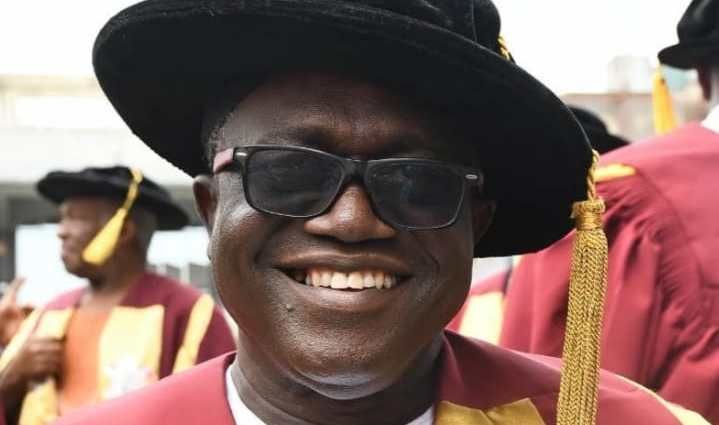

Notes on Visit to Saudi Arabia By Prof MK Othman
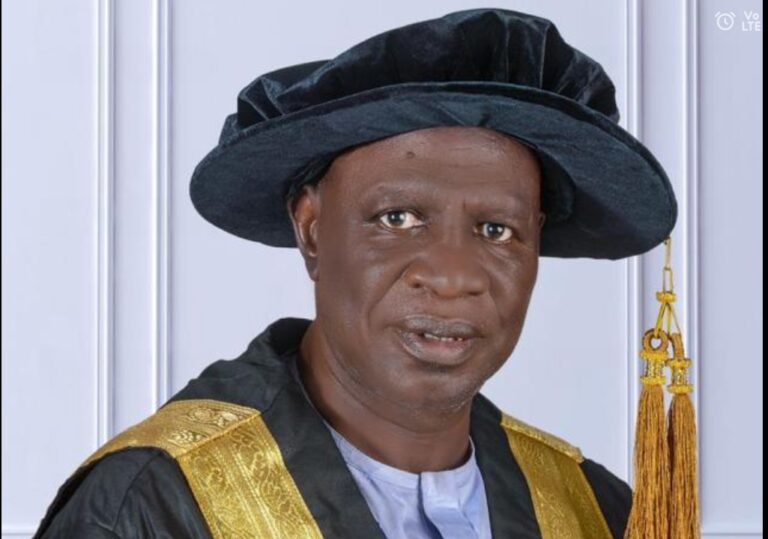
Notes on Visit to Saudi Arabia
By
Prof MK Othman
To date, I have visited Saudi Arabia four times, beginning with my first trip in 2010 and twice this year, in March and November 2025. During each of my last three visits, I was consistently amazed and stunned by the incredible and supersonic level of infrastructural development.
I believe the Saudi Arabian authorities are fully aware of the enormous spiritual responsibilities placed on the country, being the world center for Muslims. Every Muslim around the world wishes to perform one of the five required acts of the Islamic faith. For a Muslim, performing Hajj, which is performed only in Makkah and Medina, is not just a personal choice but an obligatory duty for those who are able. The nostalgia of being in front of the Holy Ka’aba, the divine house of the Almighty Allah, is so powerful that one can’t help but raise their hands in prayer for the return of that moment. Yes, whenever you’re saying goodbye to Saudi Arabia, one of your heartfelt prayers is to return for Hajj or Umrah soon.
This symbolizes the attractiveness of Makkah to Muslims worldwide. As the Muslim population is growing exponentially, the number of pilgrims to Makkah is also rising in proportion. With the global population explosion, the number of Muslims is expanding geometrically. For example, in 2000, the population was 6.14 billion, with 21% being Muslims. By 2013, the population had grown to 7.21 billion, and 22.7% of the population was Muslim. In 2016, the Muslim population increased to 24.1% of the 7.47 billion people. By 2040, the world population is expected to reach 9 billion, with Muslims making up 26%. Available data from the Saudi Authority indicate that the total number of pilgrims served by the Kingdom over the last 50 years amounted to 95,853,017. Therefore, the number of people wishing to visit Saudi Arabia to perform their obligatory acts will continue to increase annually. How will Saudi Arabia accommodate the increase in the number of pilgrims?
So far, the authority has been tirelessly working on infrastructure and human capacity development to make the pilgrims’ short stay memorable and desirable. The crowd control capacity is exceptionally excellent, but there is room for improvement.
The general public living in the two holy cities – Makkah and Madina, most of whom are non-nationals working as taxi drivers, salesmen, receptionists, etc. – disappoints me. While some of us rave about opportunities to be in these cities for spiritual cleansing and heavenly rewards, the residents are primarily focused on making money by any means necessary. They take advantage of pilgrims’ lack of knowledge and limited exposure to make fraudulent money. They want to profit from pilgrims at all costs. I remember an incident during my visit to Medina during Ramadan. The taxi I took from Jeddah dropped me near my hotel, but due to roaming issues, I couldn’t find it on Google Maps; it kept appearing and disappearing. A flashy car stopped in front of me, pretending to help. I asked the driver to direct me to my hotel because I knew it was nearby, but he asked me to come in. I did, and there was Qur’anic recitation, which made me think the man genuinely wanted to help me for spiritual reward during the holy month of Ramadan. Still, I asked him how much I should pay but insisted I should just come in, as entered my Internet service became effective and I could see my hotel, kept quiet and the driver drove round and round pretending to cover a distance and stopped, I asked him how much to pay, he said I should pay 50 riyals, I protested and showed him on the map where he took me, watsetd my time by taking me round and round, at the end we settled for 15 riyals, which was still exorbitant.
Additionally, they look down on Africans, some of us with dark skin, especially some of us wearing traditional Hausa clothes; they hiss and jest at you with derogatory comments; shinkafa-kaza. One can see that these people are semi-illiterate from Bangladesh, Yemen, Egypt, and other Arabic-speaking countries, eking a living and sending money back home. These people need to be empowered through capacity building to be more useful to themselves, the pilgrims, and the authority.
The next issue is the unfair treatment of visas to Africans, especially Nigerians. Despite Nigerians’ insatiable desire to perform Umrah and Hajj, they are not receiving fair treatment regarding visas for visits and residence permits. Nigerians holding Schengen, U.S., or UK visas traveling to Saudi Arabia can obtain a one-year visa on arrival in Jeddah for only $105 (approximately ₦ 200,000 at the current black-market rate). This visa is for multiple entries and is valid for one year, covering a family. Furthermore, the United Kingdom Muslim pays £35, equivalent to ₦75,000, for a single-entry Umrah visa to Saudi Arabia. Comparatively, Nigerians are charged a whopping ₦1.3 to ₦1.8 million, equivalent to $812 to $1,125, for a single-entry visa valid for just one month.
A significant part of the skyrocketing Visa prices in Nigeria stems from the fact that Nigerians cannot directly access the transparent Umrah visa process through online applications. Instead, they must rely on travel agencies in Saudi Arabia, which inflate prices, further escalating the overall cost. Another factor is the unscrupulous actions of travel agencies and middlemen, who exploit vulnerable and neglected Nigerian pilgrims. Many wealthy Nigerians wishing to perform Hajj or Umrah first secure a UK, Schengen, or USA Visa and travel to these countries before heading to Saudi Arabia, making the endeavor costly in terms of time and financial resources. It is disheartening that Nigerian Muslims are being exploited and shortchanged, making it difficult for many to fulfill their obligatory religious duties. Soon, many eligible Nigerians will have to forgo these obligations unless something is done to address the issue, but there is absolute silence from both ends. The silence is deafening, and the situation is genuinely pathetic.
Another complex issue is Saudi Arabia’s shift in its foreign policy toward developing countries. Recently, the country promised to invest about one billion US dollars in America, a move seen as strengthening the diplomatic relationship between the two nations and giving Americans special recognition in Saudi Arabia. This comes at a time when Nigerians, like many Muslim countries in Asia and Africa, are willing to spend their last savings to visit Saudi Arabia and perform one of the five pillars of Islam. Why can’t Saudi Arabia invest a similar huge fund in Nigeria? It is true that Saudi Arabia has recently supported Nigeria in various sectors. In 2024, the Kingdom of Saudi Arabia spent $47 million on humanitarian aid to support 98 projects across Nigeria. Similarly, in the same year, the country donated 100 tons of dates to the Nigerian government to ease the suffering of its citizens, showing that the relationship between Nigeria and Saudi Arabia is expanding beyond religious activities into other development, economic, and bilateral areas. Still, Nigerians face challenges in obtaining visas and resident permits. Can Nigerian authorities advocate for Nigerians to receive better treatment when visiting Saudi Arabia? Can Saudi Arabia ease its diplomatic policies to make it easier for Nigerians to perform Umrah and Hajj? It is my prayer that the answers to these questions are affirmative. May Allah make it easy for all those wishing to visit Saudi Arabia to do so in their lifetime, amen.