
Borrowed Glory and Stolen Credit: Why Nigeria Must Get Serious About Copyright (1) By Olaitan Adesina

Borrowed Glory and Stolen Credit: Why Nigeria Must Get Serious About Copyright (1)
By Olaitan Adesina
In Nigeria, we love talent so much that we sometimes excuse theft if it sings or dances well. We clap for the remix, sing along to the faster tempo, and we call it innovation. But there is a thin moral line between influence and infringement. When that line is crossed repeatedly and without consequence, creativity itself becomes the victim.

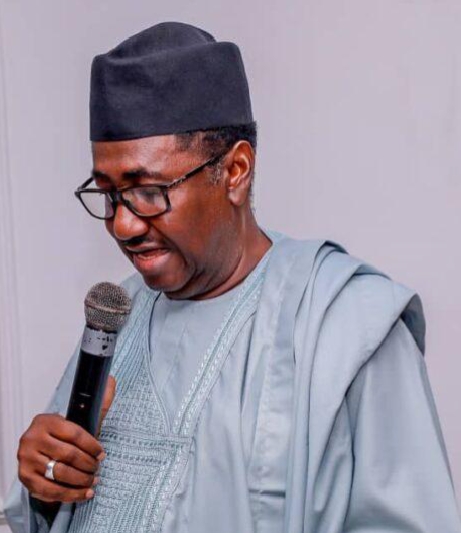
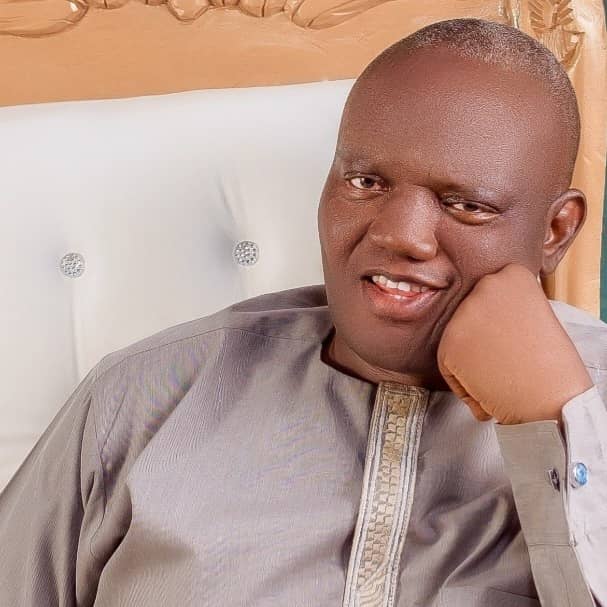
The current controversy involving Beautiful Nubia on the one hand, and Yinka Ayefele and BBO on the other, is not just about artistes disagreeing over a tune. It is about a cultural habit that treats intellectual labour as communal property when it is convenient and personal property when profit arrives. That contradiction has quietly drained respect from our creative industries for decades.
Nigeria understands land ownership better than song ownership. If someone builds on your plot in Ondo, Oshogbo or Lagos without permission, the whole community will rally behind you. Social media activists will grab their ring lights and miniature mics. But if someone lifts your melody, rearranges your rhythm, and baptizes your lyrics with a new tempo, we suddenly become philosophers. We start hypothesizing about intertextuality and asking who owns tradition, as if attribution is an optional courtesy rather than a professional obligation.
This confusion is not harmless. It destroys livelihoods. It rewrites history. It rewards loudness over originality.

The defence often offered is that music evolves. True. Highlife influenced Afrobeat. Apala shaped Fuji. Innovation thrives on inheritance. But inheritance without acknowledgement is not evolution. It is erasure. Scholars cite sources. Journalists credit interviews. Filmmakers license soundtracks. Only in our music space do we romanticize uncredited borrowing as cultural continuity.
The irony is painful. The same industry that fiercely protects performance fees becomes evasive when discussing composition rights. The same voices that demand respect for legacy sometimes deny recognition to living creators whose work they adapt.
The pattern is familiar. From reinterpretations linked to Orlando Owoh and Shina Peters to disputed adaptations involving a UK based act like WonderBoy Solek, the conversation rarely centres on permission or compensation. It centres instead on fame and power. Who is famous enough to be believed. Who is obscure enough to be ignored.
Even moments that could have modelled integrity become exceptions rather than standards. When Adekunle Gold brought Adewale Ayuba into a project to ensure proper credit, it felt like an act of wisdom rather than routine professionalism. Many opined that Ayuba should be grateful to AG for “reviving his career”. It’s in the same spirit that some have said Fela Kuti’s family should be grateful to Wizkid for keeping his legacy alive. When Jazzman Olofin called out Adekunle Gold for sharing the video of a pre-concert rehearsal where Jazzman’s song “Raise the Roof” was performed, the social media mob shouted him down and said he should be grateful. This trend should worry us.
Copyright is not a Western obsession. It is a moral principle grounded in fairness. A composer owns the labour of imagination just as a farmer owns the harvest of cultivation. To argue otherwise is to say that creativity is free only for those with influence to monetize it.
Supporters of established figures often retreat into legacy defence. They point to impact, resilience, or media achievements. Those things matter. The broadcasting footprint of Fresh FM, for example, is undeniable. But institutional success cannot sanitize ethical lapses. A great career deserves protection not immunity.
The most troubling aspect of these disputes is not the allegation itself but the instinctive counterattack. Instead of quiet resolution, acknowledgement, and restitution, we get public philosophy about folklore and history. Instead of humility, we get defensiveness. Yet humility is cheaper than litigation and more powerful than reputation management.
Copyright enforcement in Nigeria remains weak not because laws do not exist, but because cultural enforcement is absent. We shame plagiarism in universities. We punish piracy in film. But in music, we negotiate morality based on fame. That inconsistency encourages repetition.
Corporate actors are not innocent either. When brands use contested works without rigorous rights verification, they amplify injustice. The silence of commercial partners can wound original creators as deeply as the initial appropriation. When organizations such as MTN Nigeria withdraw quietly from disputed usage, they protect themselves but rarely repair the damage done to authorship.
The lesson from this should be simple. Influence requires acknowledgement. Adaptation requires permission. Success requires accountability.
Nigeria’s creative economy cannot grow on borrowed breath. Every uncredited composition is a signal to young artists that originality is optional and recognition negotiable. That message suffocates innovation faster than censorship ever could.
Legends do not shrink when they credit others. They grow. Respecting authorship does not diminish cultural heritage. It magnifies it. And when disputes arise, reconciliation should be measured not by public rhetoric but by private restitution.
The industry needs a reset. Clear licensing practices. Transparent royalties. Public acknowledgement of sources. Above all, a cultural shift that treats intellectual property not as a suggestion but as a standard.
The music will continue. The rhythms will evolve. But unless Nigeria learns to honour the hands that first played a melody, we will keep dancing to songs whose true owners are written out of history.
Just Me… THINKING OUT LOUD!
_Olaitan Adesina is a poet and author of Agidigbo: Soliloquy in Verse. He writes from Akure._