
Happy Birthday Orji Uzor Kalu: 66 Candles. One Outstanding Balance. By Chidi Ekeh

Happy Birthday Orji Uzor Kalu: 66 Candles. One Outstanding Balance.
By Chidi Ekeh
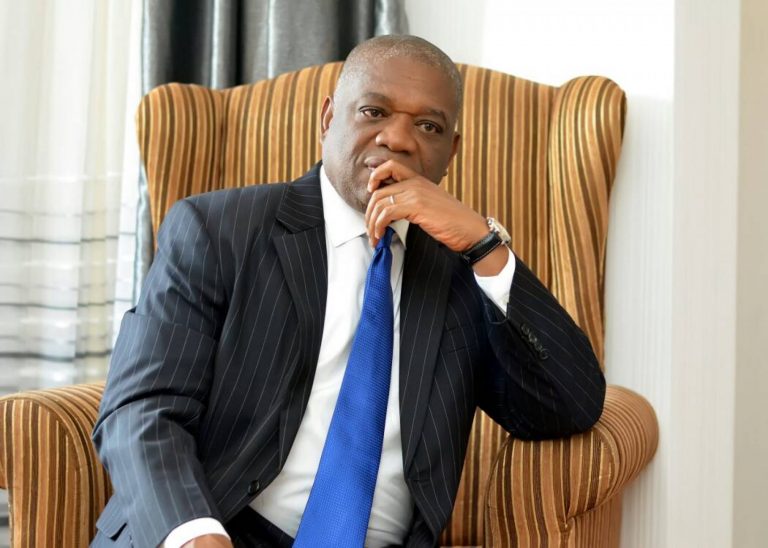
On the day Orji Uzor Kalu turns 66, Nigeria owes itself the honesty of holding both things at once the roads he built, and the money he stole to build them.
There is a photograph I keep returning to, not because I have seen it but because I can construct it perfectly from everything I know about this man.
It is December 2003. Aba. The Enyimba International Stadium is packed beyond its walls. Enyimba Football Club — Kalu’s Enyimba, the club he bankrolled and turbocharged into continental contention — have just beaten Ismaily of Egypt to win the CAF Champions League. The first Nigerian club to win it in a generation. The crowd does not know the word “euphoria” but they are living inside it. And somewhere in that noise is the governor himself: loud, outsized, incapable of restraint, the way men are when they have made something they are genuinely proud of.
That moment is real. And it belongs to Aba his city, the commercial marrow of Abia — which makes it even more his. Enyimba won it again the following year. Back-to-back. Abia State on the African map. A governor who delivered something his people could feel, not just read about in a budget document.
Today, Orji Uzor Kalu turns 66. And the honest birthday reflection is not a eulogy. It is not an insult either. It is something harder than both.
It is a reckoning.
Let us start where the story demands at the bottom.
$35. That is what he borrowed from his mother to start. Not a dynasty behind him. Not a godfather with a chequebook. A young man from Igbere, Bende, suspended from the University of Maiduguri for the kind of student activism that in a fairer country would have made him a hero, not a dropout. He took that $35 and began trading palm oil between Aba and Maiduguri. Then furniture. Then manufacturing. Then banking. Then aviation. Then oil. By the time he was 26, President Babangida was giving him the National Merit Award — the youngest Nigerian to receive it.
The business empire he built, SLOK Holdings, became a sprawling conglomerate: shipping, newspapers, airlines, banks, insurance, real estate across four continents. The Sun newspaper. He was already a billionaire before he ever walked into a Government House.
This matters. Because it means the hunger that drove him was not the hunger of a man who needed the government to eat. It was something else. Something more ambitious — and more dangerous.
He won the Abia governorship in 1999 and arrived like a man in a hurry. The sobriquet “Action Governor” was not invented by his media team. President Obasanjo coined it on an official visit after watching what the man had done in months. Roads opened up communities that had been invisible to the state. Free education. Teachers paid on time — a sentence so unremarkable in its simplicity, so radical in its Nigerian context. The Abia State Teaching Hospital in Aba, equipped and staffed. Abia State University never lost accreditation for eight years. The poverty numbers, when they came in, told a story that embarrassed wealthier states: Abia, under Kalu, recorded the second-lowest poverty rate in the entire country.
And then Enyimba. Back-to-back. All of Africa.
Current Governor Alex Otti — his political rival, a man with every incentive to diminish him — sat across from Kalu recently and said it plainly: the infrastructure blueprint he is using to develop Aba today is the one Kalu drew. You do not pay tribute to your enemies in Nigerian politics. Not unless the evidence leaves you no choice.
The record is real. The roads are real. The football is real.
Which brings us to the thing that is also real.
On the 5th of December 2019, a Federal High Court judge in Lagos convicted Orji Uzor Kalu on 27 counts of fraud and money laundering. The sentence: 12 years. The amount: ₦7.65 billion. The source of that money: the Abia State treasury. The instrument: his own company, SLOK Nigeria Limited.
Let us be precise about what that means. The same man who built roads in Abia was simultaneously routing Abia’s money into his personal corporate vehicle. The same administration that earned the praise of Obasanjo and the gratitude of the poor was also, by the court’s finding, systematically looting the state it was governing.
He did not steal from strangers. He stole from the people whose poverty rate he was lowering.
And Nigeria, being Nigeria, could not even convict him cleanly. In May 2020, the Supreme Court overturned the verdict — not because Kalu was innocent, not because the evidence had been challenged, not because the ₦7.65 billion had been returned. The court nullified the trial on a technicality: the judge who delivered the verdict had already been elevated to the Court of Appeal before he sat to read the judgment. He was, in the strict legal sense, no longer a Federal High Court judge when he sentenced Kalu. The conviction was therefore a nullity.
The facts were never disputed. The Supreme Court never said the money wasn’t stolen. It said the paperwork was wrong.
And here is where it turns from tragedy to something more specifically Nigerian.
Kalu’s co-accused — Ude Udeogu, the former Abia Director of Finance — was ordered for retrial. The EFCC moved to retry Kalu alongside him. But Kalu, with the consistency of a man who has always known how to find the angle, sued to block it. He had been tried. He had been convicted. He had served time. To retry him, he argued, would be double jeopardy. The constitution, Section 36(9), protects a citizen from being tried twice for the same offence.
A Federal High Court in Abuja agreed.
So the position of the Nigerian legal system, as it stands today, is this: Udeogu can be retried for the same theft from the same treasury, under the same facts. Kalu cannot. Same case. Same court. Same evidence. One man faces justice. The other quotes the constitution at us and returns to the Senate.
The carpet in Nigeria’s legal chambers, it turns out, moves as freely as the political one.
The EFCC is still fighting. The Court of Appeal, as recently as March 2025, cleared the commission to challenge the ruling that shielded Kalu from retrial. The litigation grinds forward, at the pace Nigerian justice reserves for the powerful and the patient.
But Kalu is not waiting. He is in the Senate, chairing the committee on privatisation, declaring himself the most important politician from the South-East, assuring anyone who will listen that no one can defeat Tinubu in 2027.
He has not been humbled. He is not designed for it.
That, too, is part of the record.
I do not think Orji Uzor Kalu is simply a thief. That framing is too clean for him, and too easy for us.
He is something more specifically Nigerian: a man of genuine capacity who looked at the resources of the state he governed and decided they were also, in some meaningful sense, his. A man who built real things and stole real money and does not appear, at 66, to experience any particular tension between those two facts. In this, he is not an exception to Nigerian political culture. He is its most vivid illustration.
The $35 was real. The CAF Champions League — won in Aba, his city — was real. The roads were real. The ₦7.65 billion was real.
The tragedy is not that Nigeria produces men like Orji Uzor Kalu.
The tragedy is that it needs to.
Happy birthday, Distinguished Senator. The people of Abia, one suspects, are still calculating what the “distinguished” part actually cost them.
Chidiebere Ekeh, a Public affairs analyst, writes from Abuja.
chidiekeh@yahoo.com.com