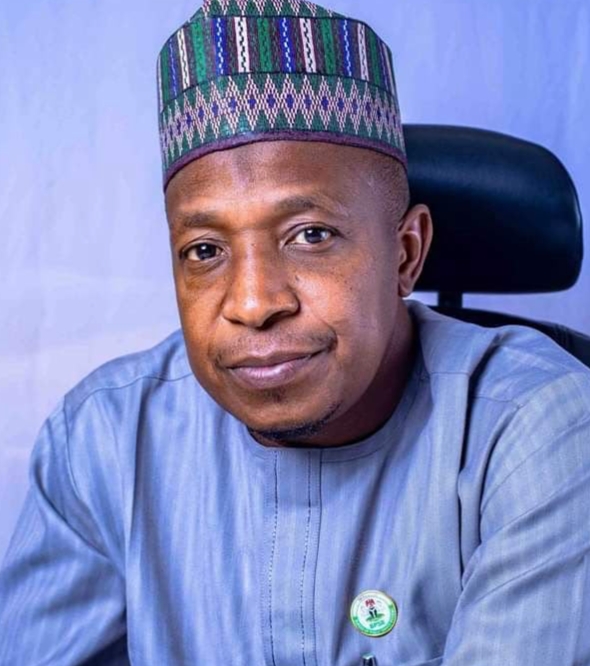
Niger’s Green Journey: From Climate Ambition to Investment By Aliyu Umar
Niger’s Green Journey: From Climate Ambition to Investment
By Aliyu Umar
For Niger State, the push to turn climate action into an investment opportunity did not begin with the planned visit of an international carbon project developer. It is the latest stage of a journey that has evolved from a Green Economy agenda into policy development, international partnerships, carbon-market engagements and institutional efforts to attract green investment.
The next major milestone is the planned visit of representatives of myclimate Foundation, an international carbon project developer and market advisory partner, from August 23 to 28, 2026. The team will assess the technical feasibility of proposed carbon projects in Niger State and examine regulatory requirements for participation in Article 6.4 activities under the Paris Agreement.
The significance of the mission lies in how it fits into the State’s broader climate-investment journey.
From Green Economy to Investment
The Bago administration began giving formal shape to its Green Economy vision in 2023, presenting environmental sustainability as an avenue for economic diversification, investment attraction, job creation and increased internally generated revenue.
In October 2023, the State hosted its first Green Economy Summit in Minna, bringing together government, investors, development partners, technical experts and other stakeholders to explore how its land, agricultural, forestry and water resources could support a sustainable economy.
The administration subsequently developed a Green Economy Blueprint covering renewable energy, transportation, infrastructure, agriculture, inclusivity and tourism, which was later presented at COP28 in Dubai.
On November 29, 2023, Governor Umar Mohammed Bago signed the Niger State Green Economy Initiative Order (No. 3), 2023, providing a policy framework for implementing the blueprint through defined targets, timelines and key performance indicators.
The State’s investment framework identifies five broad pillars: environmental conservation and carbon-sink assets, sustainable resource management, renewable energy, inclusivity and private-sector-led green jobs.
The One-Billion-Tree Ambition
A major component of the strategy emerged at COP28 in December 2023, when Governor Bago signed an MoU with UAE-based Blue Carbon for a project involving the planting of one billion economic trees.
The initiative was designed not merely as an environmental programme but as a potential economic asset, with expected benefits including carbon sequestration, forestry development, employment, biodiversity protection and community participation.
The State also linked its green economy agenda to agriculture and energy, including plans to cultivate 250,000 hectares annually for crops such as sugar, sweet sorghum, cassava and corn, with an eventual target of producing about one billion litres of biofuel annually.
The ambition was therefore broader than tree planting: to create an ecosystem where agriculture, forestry, renewable energy, waste management and carbon assets could generate both environmental and economic value.
From COP28 to COP29
Niger State returned to the global climate stage at COP29 in Baku, Azerbaijan, in November 2024. At a Niger State side event, Secretary to the State Government Abubakar Usman said the government had continued working on the frameworks required to translate its green ambitions into practical programmes.
The COP29 engagement also reflected a shift from policy formulation towards institutional capacity. The State highlighted the establishment of the Niger State Agency for Green Initiatives and engagements with technical and consulting partners to strengthen the capacity required to implement the Green Economy Blueprint.
The State also deepened international partnerships, including an agreement with German consultancy FutureCamp to support its transition towards a green economy and implementation of its sustainability framework.
Turning Environmental Assets into Carbon Assets
By 2026, the conversation had become more specific: carbon markets. In April 2026, Niger State reaffirmed plans to establish a Carbon Market Office following engagements with stakeholders, development partners and technical experts.
The initiative signalled an attempt to move beyond conventional environmental programmes towards mechanisms capable of attracting climate finance and private investment.
For Niger State, potential opportunities include agriculture, forestry, waste management, renewable energy and other areas where emission reductions or removals can potentially be measured, verified and converted into carbon-market value.
But the opportunity comes with requirements: credible data, appropriate methodologies, institutional coordination, regulatory compliance and robust measurement and verification systems.
The Bonn Connection
It is against this background that the planned myclimate mission assumes significance.
According to the Niger State Government memo, the visit is a direct outcome of discussions between myclimate, the Niger State Government and ICA Finance in Bonn, Germany, on the margins of the 64th session of the UNFCCC Subsidiary Body for Scientific and Technological Advice.
Those discussions focused on strengthening Niger State’s participation in international carbon markets under Article 6 of the Paris Agreement.
The August mission will therefore not be a ceremonial visit. It is designed as a technical feasibility exercise to determine which opportunities can work on the ground.
What the myclimate Team Will Do
The programme begins on August 23 with the team’s arrival and engagement with the Niger State Government.
On August 24, the delegation is scheduled to meet the National Council on Climate Change, the Office of the Presidential Special Envoy on Climate Change and the Office of the Special Adviser to the President on Climate Finance before travelling to Niger State for the first project-site assessment.
On August 25, stakeholder consultations will take place in three sessions. On August 26, the team will conduct additional visits to three project sites and meet local technical personnel, including visits to further schools for data collection.
The mission will conclude on August 27 with a debriefing and strategic planning session involving the State Government and myclimate team, before the delegation departs on August 28.
The objectives include fact-finding and mapping the conditions required for CORSIA or Article 6.4 activities, collecting project data and developing the basis for a carbon-market cooperation framework involving myclimate, Niger State and potential investment and climate-finance partners.
What Niger State Hopes to Gain
The immediate expected output is a report identifying priority carbon-market projects in the State.
The team is also expected to assess the most feasible landfill activity pathway under PACM and an alternative waste-management carbon project, while providing an objective assessment of Niger State’s readiness to implement high-integrity carbon projects.
If viable projects emerge, the assessment could provide the foundation for project development, financing, regulatory approvals, carbon accounting and eventual participation in international carbon markets.
The larger ambition is clear: to transform Niger State’s environmental and natural-resource assets into investable climate assets.
The journey has moved from the Green Economy Summit in 2023, through the one-billion-tree ambition and international climate engagements, to institutional development and now project-level carbon-market assessment.
The planned myclimate mission could therefore become an important test of how far Niger State has moved from climate ambition to investment readiness.
Ultimately, the success of the journey will not be measured by the number of climate conferences attended or declarations made, but by whether viable, credible and bankable projects emerge, projects capable of attracting climate finance, creating green jobs, protecting the environment and contributing to sustainable economic development.
As the State Government’s memo puts it, the mission is part of the broader vision of positioning Niger State as a destination for green investment, sustainable development, environmental protection and climate finance in Nigeria.

Aliyu Umar
Focal Officer: Niger State Carbon Market Office
19th August, 2026.