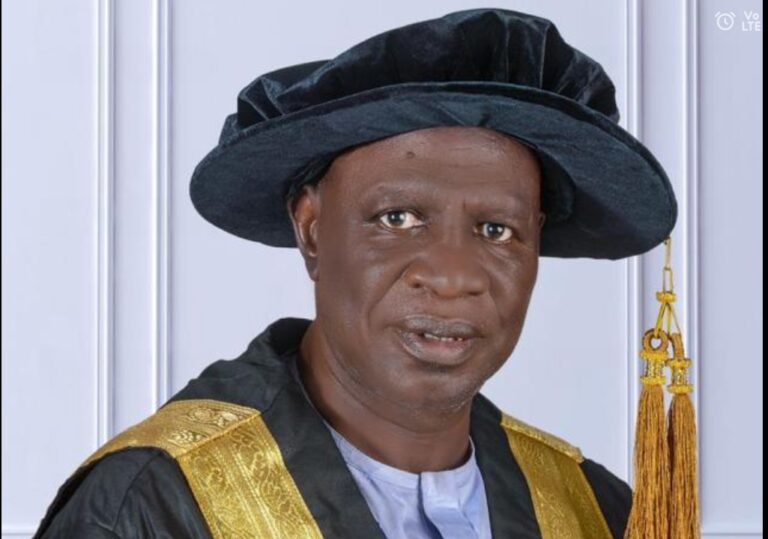
Readers’ Comments on Youths and Collective Responsibilities, and Israel/USA-Iran Conflicts By Prof M. K. Othman

Readers’ Comments on Youths and Collective Responsibilities, and Israel/USA-Iran Conflicts
By
Prof M. K. Othman

Un petit pause – a French way of saying taking a small break. After four weeks of writing four diverse articles, I am taking a breath of fresh air and sharing a few readers’ comments to allow my opinions to be viewed from different perspectives for better comprehension. Granted, there are always issues of interest in Nigeria for Nigerians and their friends and foes, but we must digest each thoroughly to make informed decisions and chart the way forward. Happy reading

Kano Family Killing: Nigerian Youths and Collective Responsibilities

Dear Prof Othman, your article on Nigerian Youths and Collective Responsibilities is well composed because it contextualizes the dangerous trend whereby Nigerian society neglects its sacred responsibility for discipline and care for its valuable human assets, the youth.

Abeni Aso-Oke

The article also adopted appropriate nuances in explaining the problems of indiscipline among the teaming Nigerian youths with its devastating consequences.

There is also clarity of thought in the article’s focus, with a succinct capture of the typical and topical themes. Coincidentally, the article situates its discourse on the burning issue of youth restlessness and its consequent repercussions for the sociopolitical trajectory of the entire West African subregion.

Therefore, the article’s appearance is timely and befitting. However, the article fell short of saying there is no solution to the problem raised. Of course, reforms in the education sector are inevitable to arrest the situation and reverse the ugly trend, but Nigerian society is not an island in the comity of nations. In other words, the solution to the exposed precarious situation goes beyond considering internal factors alone and ignores the effects of globalization.
It might be acceptable to many to say that no country, within the four corners of the globe, can succeed in solving its challenges in isolation. Thus, it would have been better for the article to provide a solution to the problem from a global perspective, considering the influence of global politics and its implications for the problem at hand.
It is a historical fact that Nigeria is not an island, and globalization has made isolationism among nations very difficult, if not impossible. For example, the Americans successfully isolated themselves from the theatre of European conflicts after the Civil War, 1861-1865, until the 20th Century. Also, the Japanese before the 19th century and after the Meiji Restoration. But the contemporary interconnectedness of nations makes isolationism and protectionism impossible.
Solving the Nigerian predicament must be approached from a global perspective, without prejudice to internal factors. The issue of out-of-school children is a smokescreen for the actual problem because it is not possible to separate economic hardship from social decadence, and the architects of the global economic strangulation are the ones promoting the narratives about out-of-school children.
How can all children be in school while the country’s scarce resources are being squandered by the states and non-state actors? We must address these issues to tackle the challenges youths face and the Nigerian dilemma. Thank you.
Dr. Dahiru Rabe

Abeni Aso-Oke

USA/Israel – Iran War: When Two Elephants Wrestle…
Your piece on the USA/ISRAEL VS IRAN WAR is generally very well considered and well phrased, as if by a professor in the humanities, not an engineering professor. Well done.
I searched Google and standard English dictionaries for the meaning of “war.” None of them stipulates that the conflict has to be between equals, i.e., an imbalance in military power. In military rankings, Russia is well ahead of Ukraine, and even the British news media refer to the conflict as a war
Your ending suggestion should be welcomed by the vast majority of people worldwide, but the leadership of the three countries involved will not be readily persuaded. What we have are irreconcilable differences between the two warring.
I think the solution must include what the Chorus puts it thus: “PRAYER IS THE KEY 2CE, PRAYER IS THE MASTER KEY.”
Emeritus Prof E.B Lucas

I think Prof. Othman is right, sir. The early theorists, such as Rousseau, Clausewitz, and even Zedong on War, recognized that war can arise from an imbalance of power, in which the strong attempt to subjugate the weaker. This is known as asymmetrical war. On the flip side, you can also have two nations with a balanced power relationship engaging in war, i.e., a symmetric war. This type of war is highly indeterminate. It could end quickly or drag on indefinitely. An example of such a symmetric power relationship is the case of Iran and Iraq. The current Iran vs. Israel conflict could have been described as a symmetric war, but US involvement turned it into an imbalance of power! The weaker country, unfortunately, didn’t share a direct border with either of these two countries, hence guerrilla-style fighting may not be employed by the weaker opponent. While praying for peace to reign, one cannot rule out surprises.
Prof Olagbaju Akeju

This write-up is well-balanced and highly educational indeed. It analyzes the crisis from a global perspective, across the African continent, and down to our dear country, Nigeria.
Short and precise article without mixing words for any reader to grasp the subject matter. May Almighty Allah continue to give you, Prof Othman, more strength and wisdom to enlighten the Nigerian populace who have been clouded by the anachronistic institution.
Prof Mohammed Umar Sanda

Salam, Prof. Othman. What a masterful analysis! The article is a tour de force, weaving together geopolitics, economics, and human impact to highlight the devastating consequences for vulnerable nations like Nigeria. It further emphasizes Nigeria’s vulnerability to global price shocks, pinpoints the human cost of war and the need for diplomacy, and offers a nuanced perspective on international relations and global governance, urging collective action toward peace and stability. In a nutshell, the article is a powerful reminder of our interconnectedness and the need for cooperation. The message is timely and relevant. Thank you, Sir, for the brilliant service to humanity.
Prof Abdulhameed Yusuf

Spread the love
0 0 votes
Article Rating
Subscribe
Notify of
guest
0 Comments
Oldest
Newest Most Voted
Inline Feedbacks
View all comments
0
Would love your thoughts, please comment.x
()
x