Reps C’tte Proposes Special Court, Other Tougher Measures Against Actors Over Crude Oil Theft …Frowns As NUPRC Absent at Stakeholders’ Meeting  By Saheed Badmus

Reps C’tte Proposes Special Court, Other Tougher Measures Against Actors Over Crude Oil Theft

…Frowns As NUPRC Absent at Stakeholders’ Meeting  By Saheed Badmus

House of Representatives Special Committee on Crude Oil Theft has emphasised the need for a special court to try saboteurs and crude oil thieves wreaking havoc in Nigeria’s oil and gas sector, saying their activities undermine the country’s socio-economic development and national security.

Abeni Aso-Oke

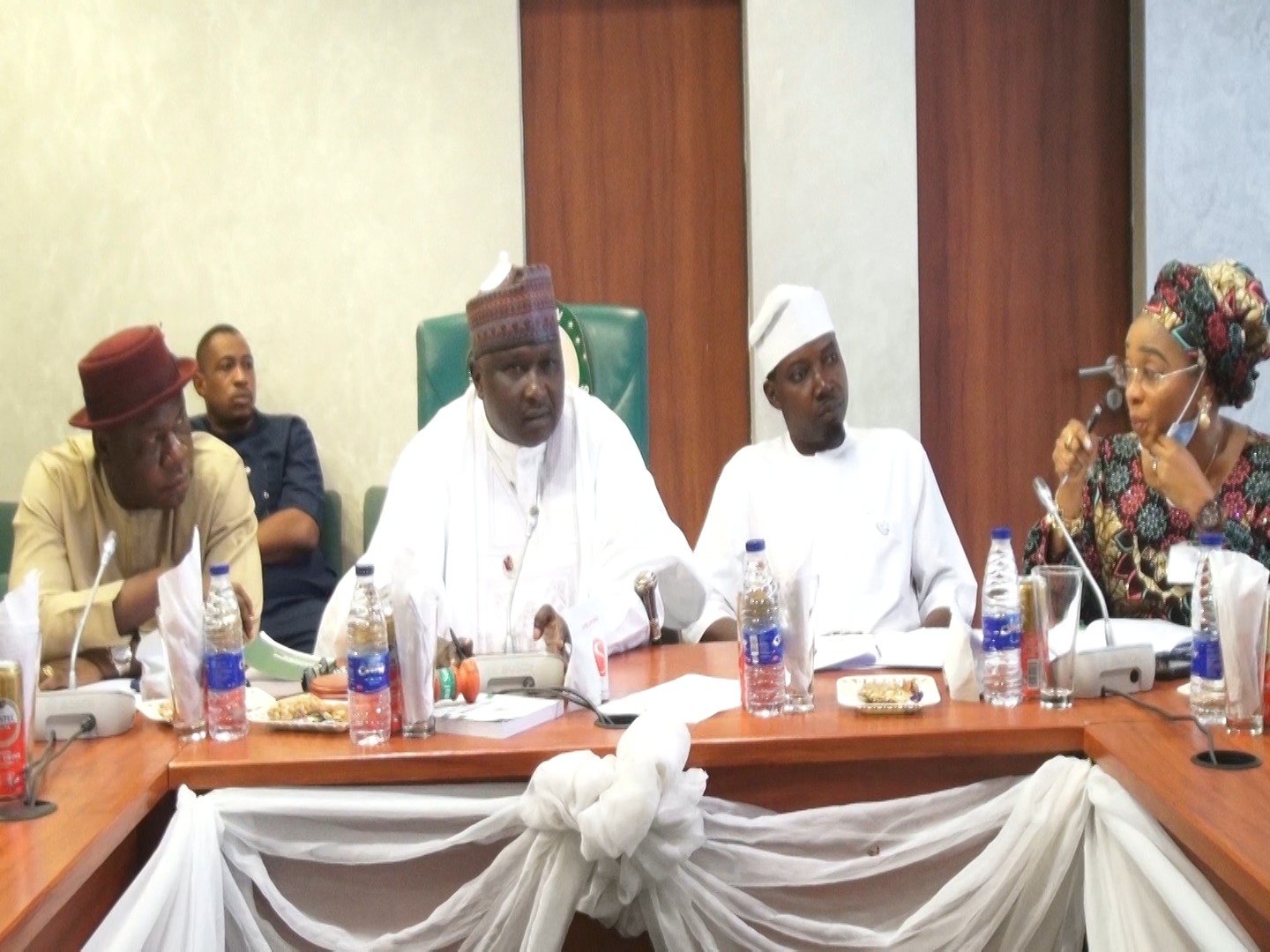
Chairman of the Committee, Hon. Alhassan Ado Doguwa, and other stakeholders made the call at a stakeholders’ meeting held by the committee on Thursday.

The meeting was part of a series of engagements organised by the committee to identify ways of curbing the menace of crude oil theft in the country.

In his address, Doguwa stated that tackling criminals engaged in crude oil theft and sabotage in the oil and gas sector requires a review of existing legislations on penalties to make them commensurate with the gravity of the offences.

Abeni Aso-Oke

He noted that weak legislations dating back to the military era have become outdated and have emboldened criminals because the penalties prescribed are too lenient to deter repeat offences.

He said: “We have been able to achieve some very remarkable progress in the course of our interface. We all agreed to work on the same page to address the existing legal frameworks and some of the bottlenecks affecting them.

“The global oil and gas economy is now in an advanced stage. Virtually all oil-producing countries are making progress because they have provided effective legal instruments to address their challenges. For this reason, we believe Nigeria should also review some of its laws.

“Some may ask what happens to the PIA. This has got nothing to do with the PIA. The PIA merely addresses the fundamentals and basic principles of doing business within the global oil economy. None of its commitments or provisions will be affected.

“However, we still have old legislations, some dating back to the military era, including military decrees and orders, which are still being applied at various levels. The courts have no option but to rely on those laws.

“Unless we provide new measures, new laws and a new legal framework, the courts will continue to rely on these obsolete legislations in handling serious criminality within Nigeria’s oil and gas sector.

“I want to assure Nigerians that the National Assembly, especially the House of Representatives through this committee, will partner with the Office of the National Security Adviser to effectively combat crude oil theft and every other criminal activity within the oil and gas environment.

“We must not forget that our daily crude oil production target in the budget remains below expectations. Until we address this problem, our production projections may continue to fall short.

“Major stakeholders present at this meeting included members of the Armed Forces. Representatives of the Nigerian Army, Nigerian Air Force, Nigerian Navy, the Nigeria Police Force and the Nigeria Security and Civil Defence Corps were all represented by senior officers.”

Doguwa also lamented the absence of key regulatory agencies, particularly the Nigerian Upstream Petroleum Regulatory Commission (NUPRC), describing it as unfortunate and counterproductive to the committee’s assignment.

He said: “It was rather unfortunate that some of the critical regulatory agencies in the oil and gas sector, particularly the NUPRC, neither attended nor sent representatives.

“We frown at that action and have directed the Clerk of the Committee to write to them, requiring them to appear before the committee because they are key stakeholders in the fight against this serious problem bedevilling our country.”

He further stated that the country must go beyond merely amending fines, levies or other punitive provisions in existing laws.

“We have also recommended in previous bills before the House the possibility of establishing a special court for these kinds of crimes because the crimes themselves are special.

“If we allow these criminal cases to go through the conventional court system, considering the delays involved, many of them will remain unresolved while the criminals escape appropriate punishment.”

A member of the committee, Hon. Cyril Hart, said the committee has enormous responsibilities because its mandate is crucial to rescuing the country from criminal syndicates undermining the economy.

He said: “The Chairman has highlighted the issue of obsolete infrastructure. There is another area which has to do with funding.

“The PIA makes it very clear that the oil belongs to the people of Nigeria. It does not belong to the oil companies. Therefore, if an oil block is not exploited for the benefit of Nigerians, that amounts to crude oil loss and economic sabotage.

“If any licence holder fails to produce within the stipulated timeline, that also amounts to economic sabotage.

“That is another major area we need to examine. We are currently witnessing divestment, with these critical national assets being transferred to Nigerian companies that may not have the required financial capacity, especially since the sector is dollar-denominated.

“If they lack the necessary capital, they may struggle. We must ensure they possess the capacity to maximise production. Nigeria has about 38 billion barrels of crude oil reserves. That is enormous.”

In his presentation, the Director of Energy Security in the Office of the National Security Adviser (ONSA), Goodluck Ilajufi, who represented the National Security Adviser, Mallam Nuhu Ribadu, said many people previously believed crude oil losses resulted mainly from ageing pipelines that required replacement.

He said: “Through our work, we have reached a point where the kind of support we require can only come from the National Assembly.

“In your earlier remarks, you spoke about reforms and new investments coming into the industry. Part of the reason we are here is to put our house in order.

“If we are asking investors to commit billions of dollars to our economy, they must be confident that adequate security exists.

“Specifically, we seek your support in strengthening the punishment regime for thieves, vandals and other criminal elements.

“My experience in the field is that after enormous state resources are spent arresting and prosecuting these criminals, the punishment they eventually receive is almost meaningless.

“A judge may sentence someone to five years imprisonment with an option of a N100,000 fine, or even six months imprisonment. That makes a mockery of the entire process.

“In some instances, suspects simply plead guilty because they already know the punishment will be lenient.

“We therefore require amendments to legislations such as the Miscellaneous Offences Act, particularly Section 107 relating to tampering with petroleum infrastructure and Section 118 relating to adulteration of petroleum products.

“If these laws are not strengthened, the deterrent effect will remain weak.”

Also speaking, the Assistant Commandant General (Operations) of the Nigeria Security and Civil Defence Corps (NSCDC), David Idowu, stressed the need for a special court to prosecute crude oil thieves and saboteurs, saying weak legislation has remained a major obstacle in the fight against oil theft.

He said: “I also want to appeal, if it has not already been included in the proposed amendments, for the establishment of special courts to try crude oil theft offenders.

“I remember when I served as a State Commandant. A lawyer returned from court one Monday in tears because the punishment handed down did not reflect the gravity of the offence.

“If there is a special court to try these offenders, including the shadow actors behind these crimes, they will receive appropriate punishment.”

Similarly, CSP Idris Abdullahi Mohammed of the Nigeria Police Force’s Petroleum and Illegal Bunkering Prevention Unit reaffirmed the commitment of the Police to combating sabotage in the oil and gas sector through active collaboration with sister security agencies and other relevant stakeholders.

Spread the love
0 0 votes
Article Rating
Subscribe
Notify of
guest
0 Comments
Oldest
Newest Most Voted
Inline Feedbacks
View all comments
0
Would love your thoughts, please comment.x
()
x