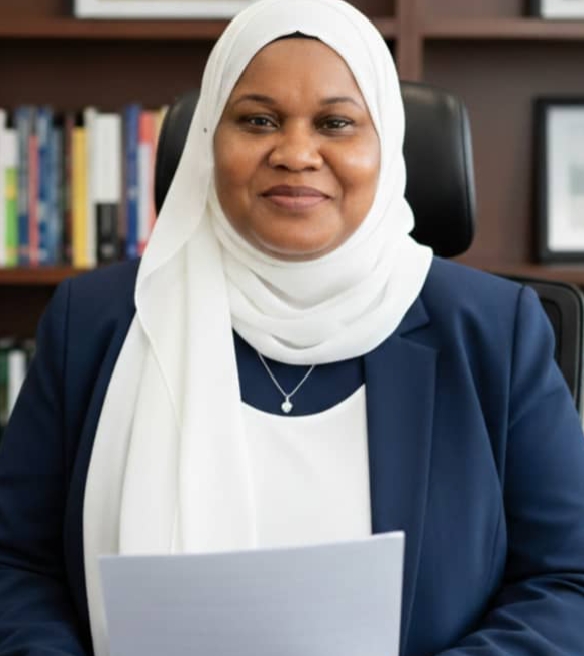
Widows and Property Rights: A Cultural Injustice Dikko Falilat Kehinde

Widows and Property Rights: A Cultural Injustice

Dikko Falilat Kehinde

Death is painful, but for many Nigerian women, the real battle begins after the burial.

A woman loses her husband today, and before the tears on her cheeks can dry, relatives begin to ask questions: “Who owns the house?” “Where are the documents?” “What happens to his land?” In some cases, the widow is treated like a stranger in the home she helped build.

Abeni Aso-Oke

There is an old saying that when two elephants fight, the grass suffers. In many inheritance disputes, the widow becomes that grass.

Across different parts of Nigeria, culture and tradition play a huge role in how property is shared after a man’s death. While many traditions are beautiful and help preserve family values, some customs have caused untold suffering for widows. Some women have been thrown out of their homes, denied access to bank accounts, and left to raise children without any support.

Stories of widows losing everything are not new.

Abeni Aso-Oke

In some communities, a widow cannot inherit her husband’s property because she is considered “not a member of the bloodline.” In some places, family members seize land, cars, businesses, and even household items, leaving the woman with nothing but memories and responsibilities.

The late Justice Niki Tobi once observed that laws and customs should not promote injustice. Unfortunately, many widows still experience exactly that.

Several court cases in Nigeria have challenged these practices. In the case of Anekwe v. Nweke, the Supreme Court condemned customs that discriminate against women in matters of inheritance. Similarly, the landmark case of Ukeje v. Ukeje affirmed that discriminatory customs that deny women inheritance rights are unconstitutional. These decisions have helped to strengthen the rights of women in Nigeria, though many people are still unaware of them. (ESCR-Net)

However, the reality on the ground remains different. Many widows do not have the money, education, or emotional strength to take family members to court.

Culture is like a river; it should give life and nourishment, not drown those who depend on it.

In the old days, many customs were created because the extended family system was strong. The husband’s family was expected to care for the widow and her children. But times have changed. Some relatives now take the property and abandon the widow.

A widow should not become a beggar because her husband died.

A woman who spent twenty years supporting her husband, managing the home, and helping to build family wealth deserves dignity and protection.

As the Yoruba say, “A kii fi owo otun ba omo wi, ka fi owo osi fa mora.” One should not punish a person with one hand and pretend to comfort them with the other.

Many family disputes could be avoided if more Nigerians wrote wills.

A will is not an invitation to death. It is an act of responsibility.

Some people avoid writing wills because they believe it means they are preparing to die. But death does not send an invitation card before arriving.

A written will clearly states:

* Who gets what.
* How children should be cared for.
* How businesses should continue.
* Who should manage the estate.

Without a will, confusion often follows. Brothers fight brothers. Children fight stepmothers. Court cases drag on for years.

A good will can protect a widow from unnecessary suffering and prevent family disputes.

Marriage is a partnership, but every woman should have some level of financial independence.

This is not because she expects her husband to die or abandon her. Life is simply unpredictable.

A financially independent woman is better prepared to face difficult situations. She can support her children, pay bills, and make important decisions without depending entirely on others.

Many widows who had businesses, careers, or personal savings were able to stand on their feet after losing their husbands.

Independence is not rebellion. It is wisdom.

The rain does not ask permission before it falls. Likewise, tragedy does not seek our approval before it arrives.

Every woman should:

* Learn a skill.
* Have personal savings.
* Understand family finances.
* Know where important documents are kept.
* Participate in decisions concerning family property.

Knowledge is power. Ignorance can be very expensive.

Men also have responsibilities.

A husband should:

* Write a valid will.
* Inform his wife about family assets.
* Keep important documents in safe places.
* Avoid secrecy concerning investments and properties.
* Protect his wife and children even after his death by making proper legal arrangements.

Love is not only saying, “I care about you.” Love is also preparing for the future of those you may leave behind.

Relatives should remember that the widow is someone’s daughter, sister, and mother.

The death of a man should not become an opportunity for greed.

Families should:

* Respect the widow’s dignity.
* Protect the interests of the children.
* Avoid grabbing property.
* Settle disputes peacefully.
* Support the widow emotionally and financially.

The property of a dead man should not become the battlefield where family members lose their humanity.

Religious leaders, community leaders, and traditional rulers have important roles to play.

They should educate people about:

* Women’s inheritance rights.
* The importance of wills.
* The dangers of property grabbing.
* Peaceful ways of resolving family disputes.

Government agencies and legal aid organisations should also help widows who cannot afford legal representation.

A Final Word

Widowhood is already a heavy cross to carry. Society should not add another burden by taking away a woman’s home, dignity, and security.

A culture that protects widows is a culture that protects humanity itself.

Today it may be someone else’s wife. Tomorrow it could be our sister, our daughter, or even our mother.

The true measure of a society is not how it celebrates the rich and powerful but how it treats the vulnerable.

Widows do not need pity; they need justice.

And justice begins when we understand that property should never become more important than people.

The article draws on Nigerian court decisions and legal discussions on inheritance rights and discriminatory customary practices.


Dikko Falilat Kehinde
Author | Public Affairs Analyst | Writer | Accountant
Writing from Lagos, Nigeria

📞 Phone: 07034484445
📧 Email: Kehindedikko@gmail.com

For professional inquiries, analysis, and writing engagements, contact as above.

Spread the love
0 0 votes
Article Rating
Subscribe
Notify of
guest
0 Comments
Oldest
Newest Most Voted
Inline Feedbacks
View all comments
0
Would love your thoughts, please comment.x
()
x