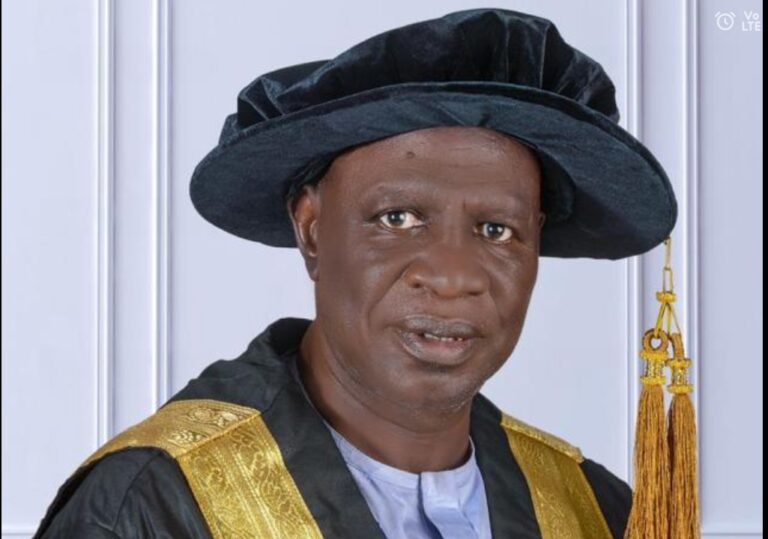
Strong Clemency Appeal for the Great ABU Zaria II By Prof. M. K. Othman

Strong Clemency Appeal for the Great ABU Zaria II
By
Prof. M. K. Othman

The ABU Zaria, like other public-funded tertiary institutions, is already navigating severe fiscal constraints. Inflation has driven up the costs of basic operations, while government allocations have struggled to keep pace with rising student populations and the increasing demands for higher-quality education and research outputs. Many universities are operating under enormous pressure, expected to expand access, produce globally competitive graduates, and contribute to national development even as resources remain limited. This is the context; the national discourse around the ABU judgment should evolve. The question is no longer simply whether the payment should be made— the courts have spoken clearly on that. University, as a product of law, must respect law and order. Therefore, the more urgent and constructive conversation must center on *how* the payment can be implemented responsibly, without inflicting severe and lasting damage on the university’s ability to serve its core mandate. Should ABU Zaria be held responsible for the action of its appointed sole administrator who had to create sanity for the university? Should the appointees (FGN) of the sole administrator bear the costs of his actions?
Historical context also demands sober reflection. The original disengagements in 1996 did not occur under normal circumstances. They emerged during a period of significant institutional crisis that prompted direct federal government intervention. Successive administrations, across different political eras, have inherited both the decisions and their lingering consequences. This reality raises a legitimate policy dilemma: Should financial liabilities rooted in those extraordinary circumstances of state involvement be borne exclusively by the university’s current operating budgets? Or does the state itself, having played a central role at the time, have a responsibility to provide targeted support? This question does not undermine judicial authority. Rather, it acknowledges that governance involves balancing multiple public interests and that the state possesses various instruments—beyond pure litigation—to resolve such inherited challenges.
Governments around the world have long recognized this tension. Public debt restructuring, special intervention funds, phased payment schedules, and negotiated settlement frameworks exist precisely because nations must protect vital institutions while honoring legal obligations. It is just like providing funds to salvage failed banks. An old African proverb powerfully captures this wisdom: when two elephants fight, it is the grass that suffers. Here, the grass represents not just the former workers and the university management, but also current students struggling to complete their studies, parents making enormous sacrifices, researchers pushing the frontiers of knowledge, and ordinary Nigerians who rely on ABU’s continued excellence. Another proverb reminds us that a child not embraced by the village may one day burn it down in search of warmth. This should not be misread as a threat of unrest, but as a profound observation about human nature: unresolved grievances, when left unattended for too long, tend to create wider ripples of discontent and instability.
Nigeria’s youthful population—predominantly students and recent graduates—already shoulders heavy burdens. They contend with high unemployment, escalating living costs, limited access to quality education, and deep uncertainty about their future prospects. In a politically sensitive period, with general elections still some months away but mobilization cycles already gathering momentum, any development that triggers prolonged academic disruption in a flagship institution like ABU requires careful handling. This is not a prediction of crisis, but a call for foresight. Academic continuity remains one of the strongest pillars of social stability in our country.
A solution to this problem that does not harm the educational system at ABU is possible and urgently needed. The Federal Government should begin by making a clear, public commitment to respect the Court of Appeal judgment and the rights of the affected former staff. Crucially, all stakeholders must resist the temptation to demonize one another. The former staff are not enemies of education or national progress. They are citizens who fought for their rights through lawful means. Similarly, the university leadership is not opposed to justice; it bears the heavy responsibility of preserving an institution that serves tens of thousands directly and millions indirectly. Both sides are products of the same Nigerian project.
The responsibility for resolving this matter now rests significantly with the administration of His Excellency, President Bola Ahmed Tinubu, GCFR; since assuming office in May 2023, his government has earned considerable recognition for its attention to tertiary education. It is on record that academic, professional learning, and training activities have proceeded without major disruption on the university campuses since President Tinubu came into office in 2023, as part of the pact he made with Nigerian students during his inaugural address to the nation.
Therefore, this case presents an important opportunity not to be treated as just another routine institutional dispute or a mere court judgment to be ticked off on paper. Instead, the case must be approached as a broader governance challenge—one that tests our ability to deliver justice for past wrongs without creating fresh disruptions for the present generation, as seen in mature democracies. Nations that thrive balance individual rights with institutional sustainability, reduce uncertainty, and maintain public confidence. If this moment is managed with wisdom, fairness, urgency, and creativity, Nigeria will achieve far more than saving one university. We will strengthen the cherished principle that justice for yesterday and national interest for today need not stand in permanent opposition. They can, and must, be reconciled for the greater good of our collective future.
Consequently, the simplest and fastest way to resolve the matter is for President Bola Ahmed Tinubu to approve the release of the necessary funds to settle the workers’ wages and to provide a stabilization fund to the university to cover incidental expenses incurred in the judicial process. Doing so amounts to accepting responsibility for the FGN’s actions in appointing the Sole Administrator, who acted and submitted feedback and reports to the FGN. The FGN duly endorsed the Sole Administrator’s actions, thereby designating itself as the body responsible for the procedures, policies, and actions aimed at mitigating the 1996 crisis and all ensuing developments.
This piece gives voice to the cries of 50 professors from diverse disciplines who passionately wrote an appeal to President Bola Ahmed Tinubu, the university’s visitor, to kindly intervene, make restitution, and close an unfortunate chapter in ABU’s history. May our cries fall on the listening ears of Mr. President so that the ongoing supersonic academic progress can be enhanced, amen.

Spread the love
0 0 votes
Article Rating
Subscribe
Notify of
guest
0 Comments
Oldest
Newest Most Voted
Inline Feedbacks
View all comments
0
Would love your thoughts, please comment.x
()
x