
When Freedom Is Held for Ransom: The Global Scourge of Kidnapping Dikko Falilat Kehinde

When Freedom Is Held for Ransom: The Global Scourge of Kidnapping
Dikko Falilat Kehinde
Kidnapping is perhaps one of humanity’s darkest crimes. It does not merely rob people of their freedom; it steals peace from families, empties bank accounts, destroys dreams and leaves emotional wounds that may never heal. It is a crime that turns birthdays into prayer vigils, family dinners into emergency meetings, and joyful homes into houses filled with silence. Like wildfire driven by a fierce wind, kidnapping has spread across continents, sparing neither the rich nor the poor, neither children nor adults, neither famous personalities nor ordinary citizens.

Today, kidnapping is no longer confined to one nation or one region. It has become a global criminal enterprise, fuelled by organised crime, terrorism, political instability, human trafficking and weak law enforcement. From the highways of Nigeria to the deserts of Libya, from the jungles of Colombia to the mountains of Mexico, from Haiti to the Philippines and from Pakistan to parts of Europe, criminal organisations continue to profit from human misery.
The frightening reality is that many kidnapping operations are no longer carried out by desperate individuals acting alone. They are sophisticated criminal businesses with financiers, intelligence gatherers, transporters, armed guards, negotiators and money launderers. Victims are treated as commodities rather than human beings. In some regions, they are moved from one criminal group to another, almost as though they were merchandise changing ownership.
Nigeria remains one of the countries battling this menace on multiple fronts. Armed bandits, criminal gangs, terrorists and organised syndicates have transformed kidnapping into a lucrative industry. Schoolchildren, traditional rulers, farmers, religious leaders, medical practitioners, commuters and even security personnel have all become targets.

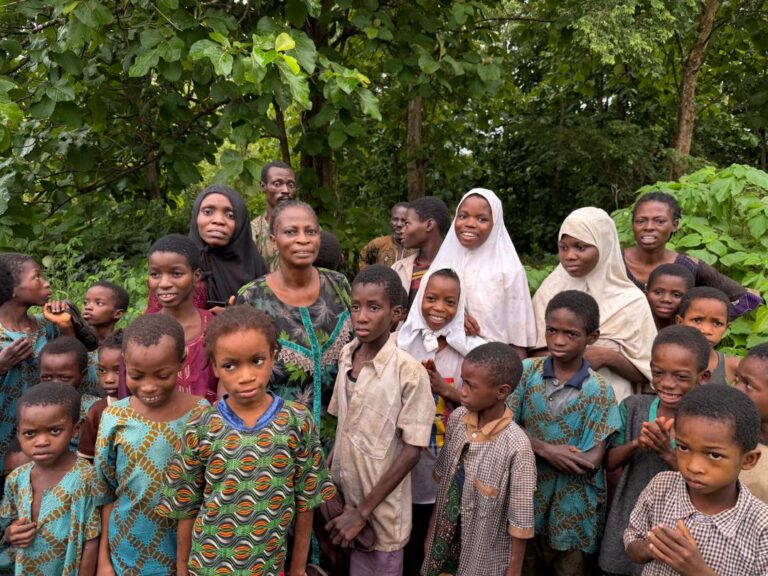
One recent incident that shook the nation was the abduction of students in the Oriire Local Government Area of Oyo State, where innocent children experienced the horror that has become all too familiar across several parts of the country. Such attacks remind citizens that danger can appear in anywhere, reinforcing the painful reality that insecurity respects no boundaries.
The infamous Chibok schoolgirls abducted in 2014 remain one of the world’s most recognised symbols of mass kidnapping. While many have regained their freedom over the years, others remain missing, leaving families suspended between hope and heartbreak. The later abduction of students from Dapchi and several schools in Kankara, Jangebe, Kagara and other communities further demonstrated how educational institutions themselves have become vulnerable.
Across the border, Libya tells another painful story. Years of political fragmentation created fertile ground for armed militias, traffickers and organised criminal networks. Thousands of African migrants travelling through Libya in search of greener pastures have instead found themselves imprisoned in illegal detention centres, tortured for ransom, sold into forced labour or exploited by human traffickers. Families scattered across Nigeria, Ghana, Sudan, Eritrea, Ethiopia and other African nations have sold land, livestock and lifelong savings in desperate attempts to rescue loved ones trapped in what has become one of the world’s most dangerous migration corridors.
Elsewhere in Africa, kidnapping continues to thrive in parts of the Sahel, the Lake Chad Basin, the Democratic Republic of Congo, Somalia and Mozambique, where insurgent groups and criminal organisations exploit fragile security systems.
The crisis is by no means limited to Africa.
Mexico has battled powerful cartels whose operations extend beyond narcotics into kidnapping and extortion. Colombia, though significantly improved from previous decades, witnessed years when guerrilla organisations such as the FARC became notorious for abducting civilians, politicians and foreigners for ransom or political leverage.
Haiti continues to suffer one of the highest kidnapping rates in the Western Hemisphere, with armed gangs exercising alarming influence over communities and transport routes.
The Philippines has long confronted the activities of the Abu Sayyaf Group, whose kidnappings have affected both local citizens and foreign nationals. In parts of Pakistan and Afghanistan, extremist organisations have similarly used hostage-taking to spread fear and finance their operations.
History is also filled with high-profile kidnapping cases that captured global attention.
In Italy, John Paul Getty III was kidnapped in 1973, and his captors notoriously cut off part of his ear to pressure his wealthy family into paying ransom. The world watched in horror.
In the United States, the 1932 kidnapping and murder of Charles Lindbergh Jr., the infant son of famed aviator Charles Lindbergh, shocked America and transformed kidnapping laws forever.
More recently, schoolgirls abducted by Boko Haram in Nigeria became a global cause championed by world leaders and activists under the #BringBackOurGirls campaign.
There are also stories that inspire hope. Íngrid Betancourt, the Colombian politician kidnapped by FARC in 2002, spent more than six years in captivity before being dramatically rescued by Colombian security forces in 2008. Her rescue demonstrated what intelligence-led operations and political determination can achieve.
Sadly, not every family receives such good news. Some victims never return. Others are found too late. Many remain missing, becoming painful statistics in annual security reports while their families continue searching for answers that never come.
Several notorious criminal leaders have eventually faced justice. Colombian authorities weakened the FARC’s kidnapping machinery through sustained military and political efforts. Mexico has arrested numerous cartel leaders over the years, though new factions often emerge. Nigeria has eliminated or arrested several notorious bandit commanders and terrorist financiers, yet criminal networks frequently regenerate, proving that eliminating individual leaders alone is insufficient. When one snake is cut in two, another often crawls out of the same hole.
Kidnapping flourishes where poverty, corruption, weak governance and impunity intersect. It feeds on unemployment, porous borders, illicit arms trafficking and ineffective justice systems. Criminals become emboldened when prosecutions are slow, convictions are rare and collaborators operate freely within communities.
Governments must therefore move beyond reactive responses. Intelligence gathering should be strengthened. Border surveillance must improve. Modern technology including drones, satellite monitoring, biometric databases and digital forensic capabilities should support security operations. Witness protection programmes must encourage citizens to provide credible information without fear of retaliation.
International cooperation has never been more important. Criminal gangs do not recognise national borders; therefore, governments cannot afford to fight them in isolation. Intelligence sharing among African states, collaboration with Interpol and stronger diplomatic engagement are essential. Embassies and consulates should establish emergency support mechanisms for citizens travelling or working abroad, particularly migrants who remain vulnerable to traffickers and ransom syndicates.
Communities also have an indispensable role. Security begins with vigilance. Suspicious movements, abandoned camps, unusual financial transactions and criminal recruiters should be reported promptly. Religious institutions, schools, traditional rulers and civil society organisations must continue educating the public about personal safety and the dangers of irregular migration.
An old African proverb says that “when a goat disappears repeatedly, the entire village must inspect the fence.” Kidnapping is no longer someone else’s tragedy. It is humanity’s collective challenge. Every victim represents a broken family, every ransom strengthens organised crime, and every successful abduction weakens society’s confidence in justice.
The world possesses the knowledge, technology and resources to confront this evil. What remains uncertain is whether governments possess sufficient political courage, regional solidarity and unwavering commitment to dismantle the criminal empires that profit from fear.
Freedom is not a privilege reserved for the fortunate; it is a fundamental human right. Until every government treats kidnapping as an assault on humanity itself rather than merely another crime statistic, countless families across the globe will continue to live between hope and heartbreak, praying that the next telephone call will not carry another ransom demand.
Dikko Falilat Kehinde
Author | Public Affairs Analyst | Writer | Accountant
Writing from Lagos, Nigeria
📞 Phone: 07034484445
📧 Email: Kehindedikko@gmail.com
For professional inquiries, analysis, and writing engagements, contact as above.